
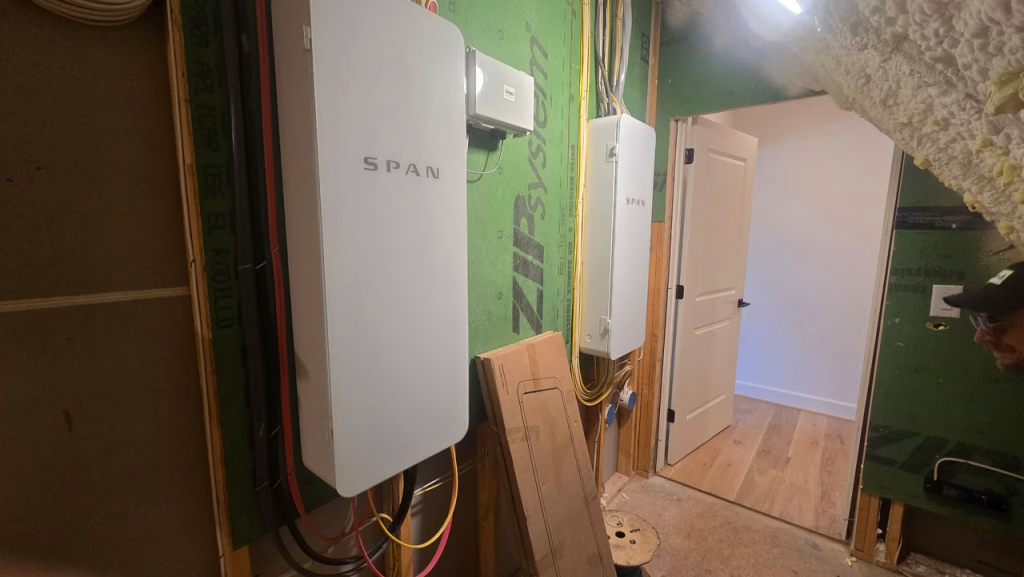
A SPAN smart panel integration does far more than replace a conventional electrical panel.
It gives homeowners circuit-level energy monitoring, remote control over selected loads, intelligent EV charging, battery-backup prioritization, and a clearer understanding of how electricity is being used throughout the property.
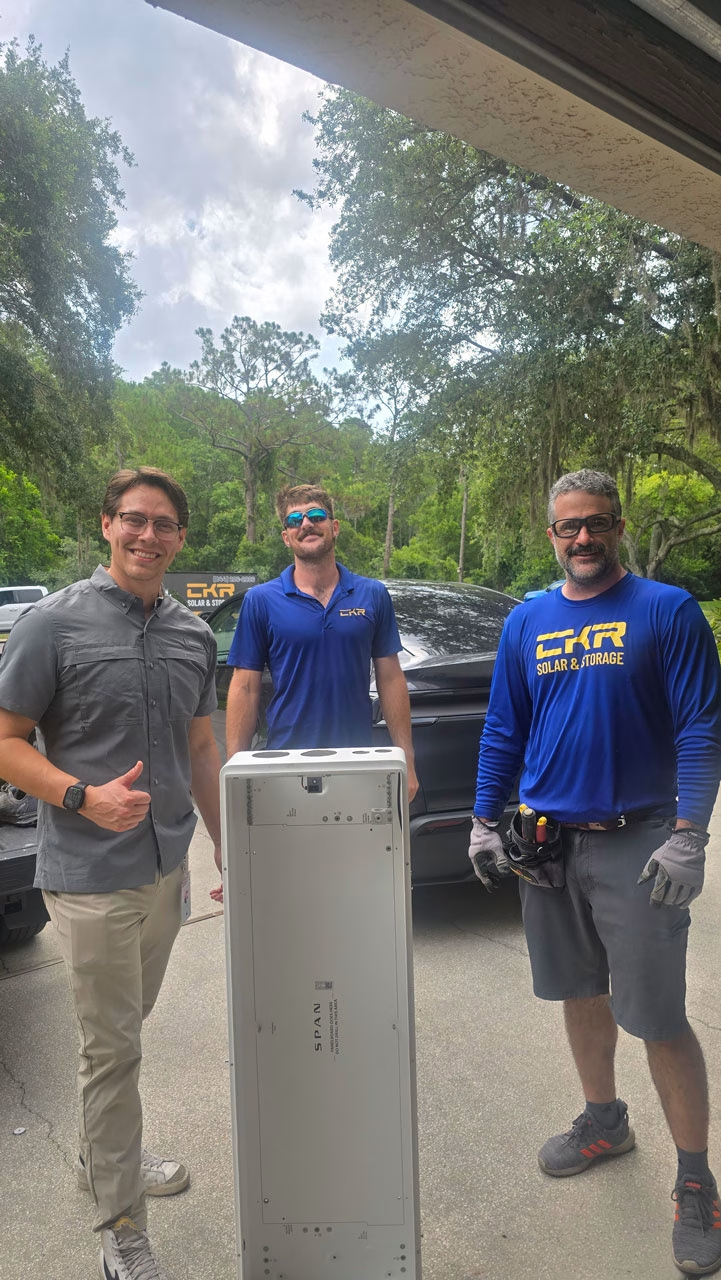
But selecting the right SPAN panel requires more than comparing equipment specifications.
The installer must understand:
- Electrical-service design
- Existing and future circuit requirements
- Battery-backup architecture
- Solar integration
- EV charging
- HVAC and pool loads
- Generator integration
- Service-upgrade avoidance
- Local permitting and inspection requirements
- SPAN commissioning and circuit mapping
At CKR Solar, we have completed more than 150 SPAN smart panel installation projects across the Southeastern United States.
Our SPAN projects extend from Miami to Fayetteville and from Birmingham to Naples, with installations throughout Florida, Alabama, and Georgia.
That experience includes small residential panel replacements, complex 400-amp homes, new-construction energy systems, battery retrofits, EV charging, generator integration, and properties requiring more than one SPAN panel.
More Than 150 SPAN Integrations Across the Southeast
Installing more than 150 SPAN panels has given CKR practical experience with homes and electrical systems that cannot be reduced to one standard design.
Our SPAN projects have included:
- MAIN 40 panel replacements
- MLO 48 installations
- MLO 24 smart subpanels
- Compact MAIN 16 installations
- Dual-SPAN 400-amp homes
- New-construction electrical systems
- Tesla Powerwall integration
- FranklinWH battery integration
- Sol-Ark and HomeGrid systems
- SPAN Drive EV charging
- Generator integration
- Solar-plus-storage projects
- Battery systems without solar
- Pool houses, detached buildings, garages, and accessory structures
The climate and construction methods also change considerably across the Southeast. Our custom solar and electrical installation must take those factors into account.
A SPAN smart panel integration in Miami or Naples may involve heavy air-conditioning loads, pool equipment, hurricane resilience, and outdoor service equipment. A Birmingham or Auburn project may include different construction methods, utility requirements, service arrangements, and backup-power priorities. A Fayetteville-area project may involve a large custom home, multiple HVAC systems, new construction, or a more complex multi-panel design.
The equipment may be the same, but the installation rarely is.
That is why field experience matters.
A qualified SPAN installer must know how to evaluate the entire property rather than simply replace one panel box with another.
CKR Solar Is a 2026 SPAN Premier Installer
 CKR Solar is recognized as a 2026 SPAN Premier Installer.
According to our SPAN account manager, CKR has also completed the highest number of SPAN activations in the Southeastern United States.
That information was communicated directly to CKR based on our account activity. It is not presented as a publicly published national ranking.
A SPAN activation represents more than purchasing or mounting a panel. The equipment must be installed, commissioned, connected, and associated with an operational SPAN Home account.
With more than 150 completed SPAN smart panel integrations, CKR has worked through a wide range of real-world electrical conditions, including:
- Existing panels with obsolete or incompatible breakers
- Homes with more circuits than one SPAN can accommodate
- 400-amp services divided into two 200-amp sections
- Long feeder runs
- Solar and battery interconnections
- HVAC systems with high starting and operating loads
- Pool pumps, heaters, hot tubs, and outdoor equipment
- EV charging on heavily loaded 200-amp services
- New homes designed around energy storage from the beginning
- Existing homes where equipment must be integrated without unnecessary demolition
This practical experience allows CKR to approach SPAN as part of a complete energy system rather than as a standalone electrical-panel product.
What Is a SPAN Smart Panel?
A conventional electrical panel distributes electricity through circuit breakers. It provides protection, but it generally tells the homeowner very little about how the house is operating.
A SPAN smart panel integration adds monitoring, communication, and load control to the electrical-distribution system.
Through the SPAN Home App, the homeowner can see individual circuits, review energy consumption, identify larger loads, and remotely control eligible circuits.
When SPAN is integrated with battery storage, the homeowner can also decide which circuits should have priority during an outage.
For example, the home may prioritize:
- Refrigerators and freezers
- Internet equipment
- Lighting
- Security
- Medical equipment
- Bedroom outlets
- Well pumps
- Selected air-conditioning equipment
Other circuits can be deprioritized or temporarily disabled, including:
- EV charging
- Pool heaters
- Clothes dryers
- Electric ovens
- Secondary HVAC systems
- Hot tubs
- Other large nonessential loads
This does not increase the amount of energy stored in the battery. It helps the homeowner use the available energy more intelligently.
Choosing Between the SPAN MAIN 40, MLO 48 and MLO 24
SPAN offers several panel configurations for different electrical designs.
SPAN MAIN 40
The MAIN 40 is generally used as a primary panel in an appropriate 100- to 200-amp application.
It offers 40 controllable circuit spaces and can become the central platform for:
- Whole-home monitoring
- Battery-backup prioritization
- EV charging
- Solar integration
- Future electrification
- Managed HVAC and appliance loads
SPAN MLO 48
The MLO 48 provides 48 controllable circuit spaces but does not contain a main-breaker position.
It is typically installed downstream from suitable service equipment or upstream of overcurrent protection.
The MLO 48 can be useful for:
- Large homes
- High circuit counts
- 400-amp services
- Large secondary distribution panels
- Multi-panel battery systems
- Extensive HVAC, pool, or outdoor loads
SPAN MLO 24
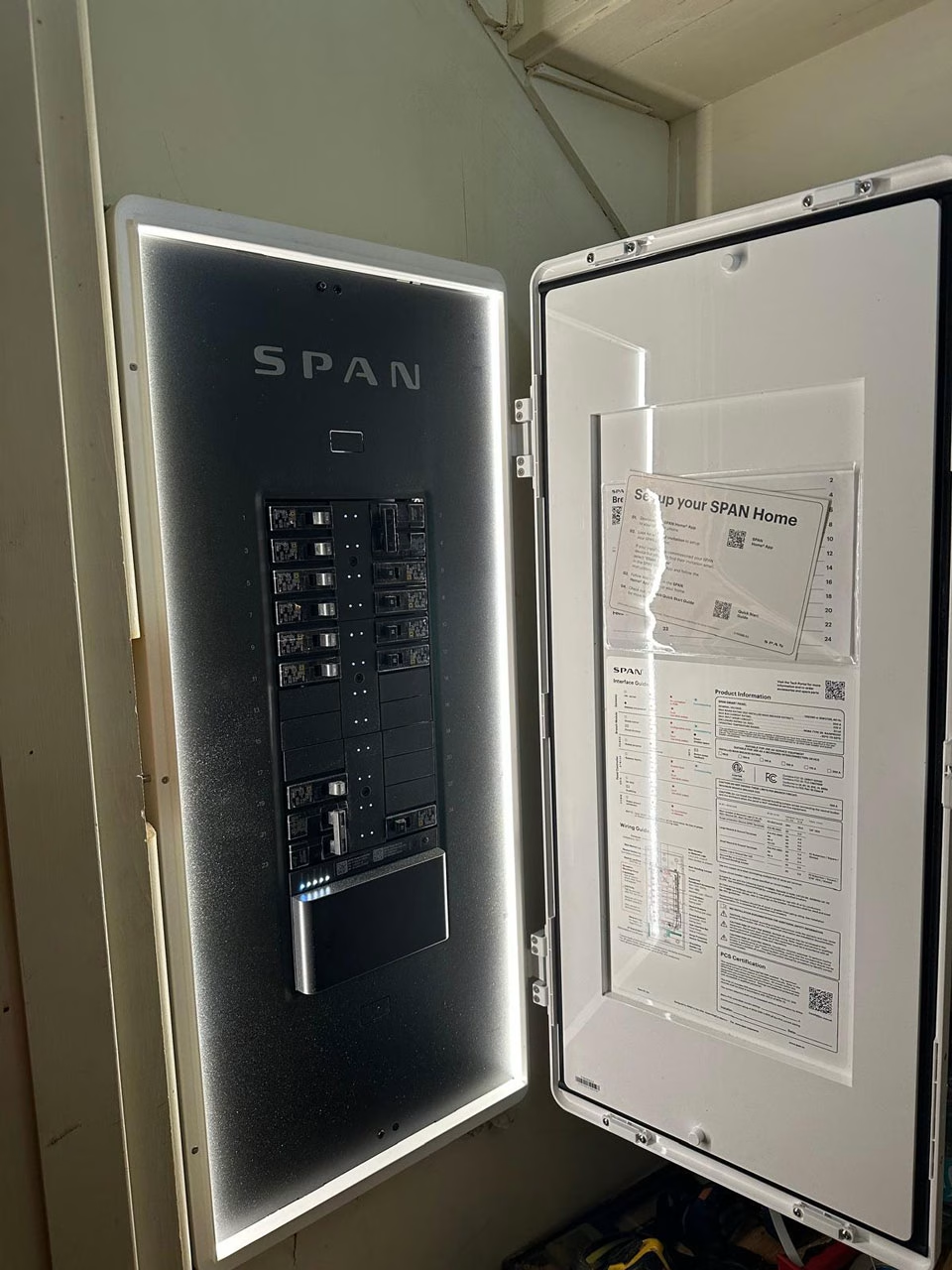
The MLO 24 provides 24 controllable circuit spaces in a smaller enclosure.
It can be an efficient choice for:
- Garages
- Pool houses
- Home additions
- Workshops
- Accessory dwelling units
- Dedicated backup loads
- EV charging
- Secondary HVAC equipment
- Smaller groups of managed circuits
The MLO 24 allows the homeowner to add smart monitoring and load control without installing a larger 48-space secondary panel that the project may not need.
Real-World Load Visibility at the Hames Project in Auburn
The Hames project in Auburn demonstrates why SPAN is more than a backup-power accessory.
During commissioning, CKR could observe the home’s major loads as equipment turned on and off.
This helped confirm that:
- Circuits had been identified correctly
- Air-conditioning equipment was cycling
- Household loads appeared in the correct locations
- The system responded to changes in demand
- Managed loads operated as intended
- Battery charging and discharging reflected actual home use
With a conventional panel, an installer may confirm that a circuit is energized but still have limited visibility into how the connected equipment is operating.
SPAN allows the installer and homeowner to see the behavior of the home more clearly.
That can be especially useful when diagnosing why a battery is discharging quickly or why a particular circuit is consuming more energy than expected.
How a Miami Homeowner Identified an Air-Conditioning Problem
Our Miami client Steven Rogers used his home-energy information to recognize that his air-conditioning system was consuming substantial electricity without cooling the home as effectively as expected.
The pattern gave him a reason to have the HVAC equipment evaluated before it failed completely.
Steven was able to replace the air-conditioning system before the peak of the Miami summer.
SPAN did not mechanically diagnose the air conditioner, and the app does not replace a qualified HVAC contractor.
What it provided was visibility.
Similar energy-use patterns may help a homeowner recognize:
- An air conditioner running longer than usual
- A water heater operating at unexpected times
- Pool equipment running outside its schedule
- An EV charging during an expensive utility period
- A circuit remaining active when equipment should be off
- A major appliance consuming more electricity than expected
Circuit-level monitoring can therefore become a form of preventive awareness rather than merely a way to view energy totals.
What Does a SPAN Smart Panel Integration Cost?
Pricing is an important consideration, but it is only one part of selecting the correct SPAN design.
The panel price alone does not represent the complete installed project.
A complete SPAN smart panel integration may also include:
- Compatible circuit breakers
- Service or feeder conductors
- Conduit and fittings
- Surge protection
- Grounding and bonding work
- Service-equipment changes
- Permitting
- Engineering
- Inspection coordination
- Network connections
- Circuit identification
- Software commissioning
- Customer setup and training
Approximate Installed SPAN Pricing
| SPAN Project | Approximate Installed Price |
|---|---|
| SPAN MAIN 40 | $12,000–$16,000+ |
| SPAN MLO 24 Smart Subpanel | $8,500–$14,000+ |
| SPAN MLO 48 Smart Subpanel | $11,000–$19,000+ |
| MAIN 40 with MLO 24 | $17,000–$26,000+ |
| MAIN 40 with MLO 48 | $20,000–$32,000+ |
| Complex Dual-SPAN 400-Amp Project | $27,000–$42,000+ |
| MAIN 40 with SPAN Drive | $14,250–$20,250+ |
These approximate ranges include an allowance for up to 20 single-pole arc-fault and/or dual-function arc-fault/GFCI breakers.
More than 20 protected circuits, specialty two-pole GFCI breakers, long feeder runs, service-equipment modifications, battery integration, or corrective electrical work can increase the final cost.
Why Arc-Fault and Dual-Function Breakers Matter
Modern panel replacements may require a substantial number of arc-fault or dual-function breakers.
For planning purposes, up to 20 protected breakers can represent approximately: $1,500 to $2,000 in materials
That amount is in addition to standard single-pole and two-pole breakers used for air conditioners, water heaters, ranges, dryers, pools, well pumps, solar equipment, batteries, and EV chargers.
This is one reason an advertised panel price should not be confused with a complete installed price.
When Does a Home Need Two SPAN Panels?
Some homes have too many circuits for one panel.
Others have a 400-amp electrical service divided into two 200-amp sections.
These properties may include:
- Multiple air-conditioning systems
- Pool pumps and heaters
- Two kitchens
- Detached garages
- Workshops
- EV chargers
- Electric water heaters
- Hot tubs
- Guest houses
- Extensive outdoor loads
In these cases, two SPAN smart panel integrations may be the correct solution.
A dual-panel project can involve:
- Two feeder arrangements
- Two breaker migrations
- Additional service equipment
- More conduit and conductors
- Load redistribution
- Battery-system coordination
- Two sets of circuit mapping
- Additional networking
- More commissioning time
The project must be designed as one electrical system rather than as two unrelated panel replacements.
400-Amp Tampa Project With SPAN and Tesla Powerwall
One of CKR Solar’s Tampa projects involved a 400-amp electrical service and multiple SPAN smart panel integrations with Tesla Powerwall battery backup.
The home’s service size, circuit count, battery output, HVAC loads, and homeowner priorities all had to be coordinated.
Birmingham SPAN and Tesla Powerwall Project
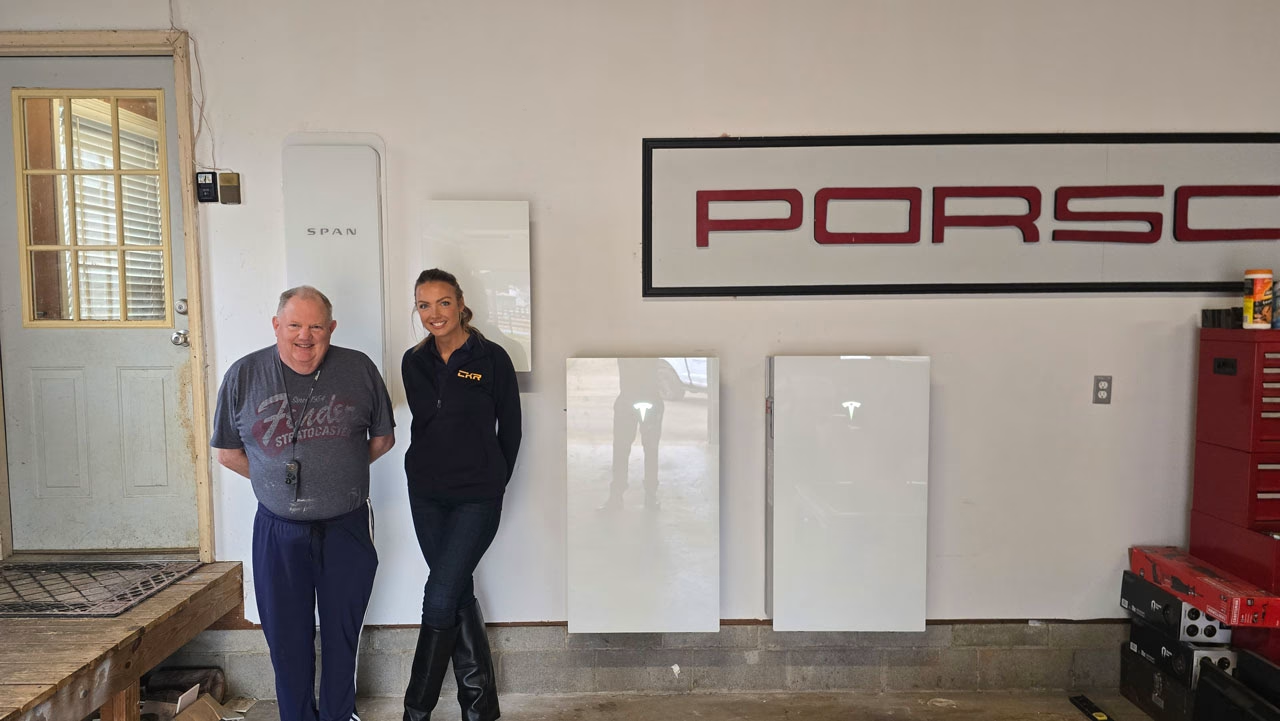
This Birmingham project demonstrates how SPAN can act as the home’s intelligent electrical-distribution layer while Tesla Powerwall provides stored energy and outage protection.
SPAN Smart Panel Integration with New Construction
The best time to design a home’s energy infrastructure is before the walls are closed.
For new construction, CKR Solar can work directly with:
- Homeowners
- Architects
- Electrical engineers
- Builders
- General contractors
- HVAC contractors
- Pool contractors
- Generator contractors
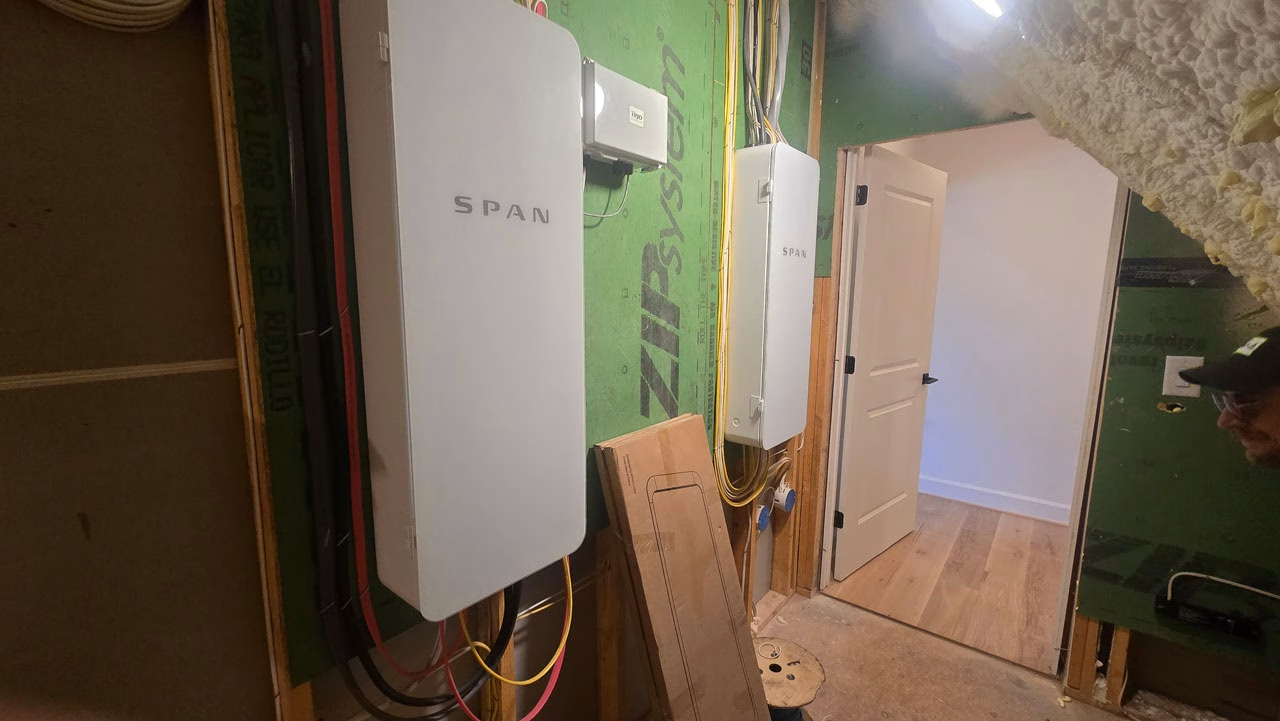
Instead of adding solar, batteries, EV charging, and load management after construction is complete, the entire system can be coordinated from day one.
Early design allows the project team to determine:
- Whether the home needs a 200-amp or 400-amp service
- Whether one or multiple SPAN panels are required
- The correct MAIN and MLO panel combination
- Battery size and placement
- Solar-inverter location
- Generator-integration requirements
- EV-charger locations
- Feeder sizes
- Conduit routes
- Structural backing
- Equipment clearances
- Ethernet and communications wiring
- Future expansion capacity
Planning Battery Storage From the Beginning
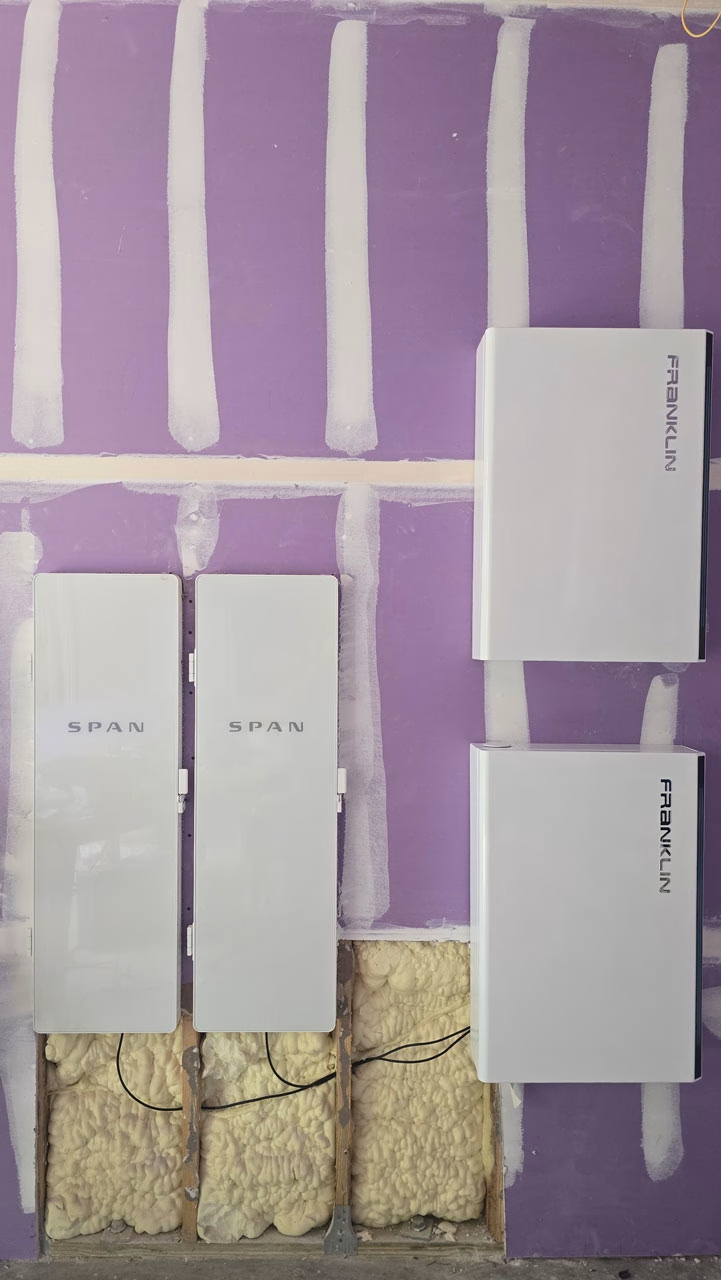
Battery location affects:
- Conductor length
- Voltage drop
- Equipment clearances
- Structural requirements
- Fire-code compliance
- Serviceability
- Future expansion
- The appearance of the finished installation
Planning these details before drywall can prevent costly changes later.
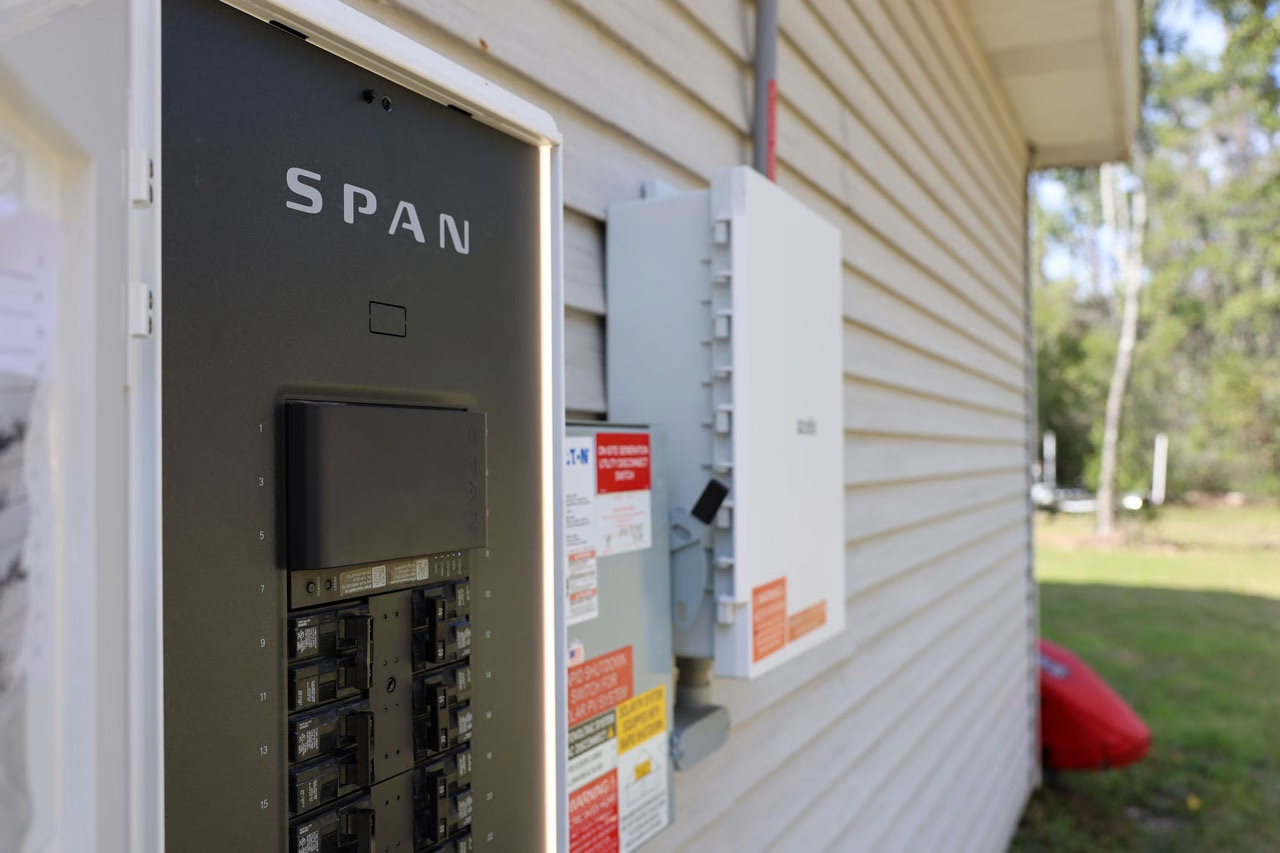
Compact SPAN Options for Smaller Services
Adding an EV Charger Without Automatically Upgrading to 400 Amps
A new 48-amp Level 2 EV charger can place significant demand on an already heavily loaded 200-amp service.
The conventional response may be to replace the existing service with a 400-amp system.
That can involve:
- New meter equipment
- New service conductors
- New feeder conductors
- Two conventional panels
- Larger conduit
- Utility coordination
- Trenching
- Transformer work
- Interior and exterior repairs
- A separate EV charger and circuit
A complex 200-amp-to-400-amp upgrade with EV charging may cost approximately: $15,500 to $38,500+
For a qualifying property, another option may be to retain the 200-amp service, replace the conventional panel with a SPAN MAIN 40, and install SPAN Drive.
PowerUp can monitor home demand and dynamically reduce EV charging when other large loads are operating.
When household demand falls, charging can increase again.
A MAIN 40 and SPAN Drive project may cost approximately: $14,250 to $20,250+
SPAN does not eliminate every service upgrade. The existing conductors, equipment condition, local code, sustained demand, and future loads must all be evaluated.
The purpose is to determine whether rebuilding the entire service is genuinely necessary to support one managed EV charger.
Watch a Complete SPAN Installation Tour
Our custom SPAN smart panel integration video shows how the panel works with solar, battery storage, EV charging, and the SPAN Home App.
It demonstrates what homeowners receive beyond the physical panel:
- Circuit-level monitoring
- Remote load control
- Backup prioritization
- Energy reporting
- Better visibility into how the home operates
Why Choose an Experienced SPAN Installer?
A SPAN panel must be designed, installed, mapped, connected, and commissioned properly.
A professional SPAN panel installer must understand how the panel interacts with:
- The electrical service
- Solar production
- Battery storage
- EV charging
- HVAC equipment
- Pool equipment
- Generators
- Local electrical codes
- Utility requirements
- The homeowner’s backup priorities
With more than 150 SPAN smart panel integrations from Miami to Fayetteville and Birmingham to Naples, CKR Solar has experience across a wide range of property types, climates, utilities, and electrical designs.
We have installed SPAN in small homes, large custom residences, 400-amp properties, new construction, battery retrofits, and commercial or rural applications.
That experience allows us to design around the entire home rather than around one piece of equipment.
At CKR Solar, the objective is not simply to replace an electrical panel.
It is to create a coordinated energy system that is safe, serviceable, properly commissioned, and prepared for solar, battery storage, EV charging, generators, HVAC loads, and future electrification.