
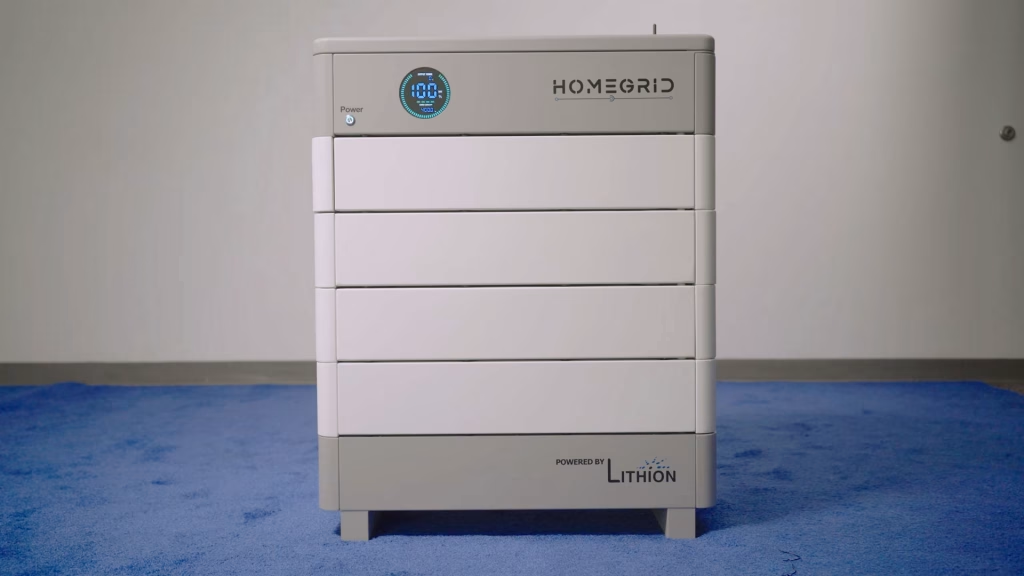
A HomeGrid off-grid system gives homeowners the ability to produce, store, and manage their own power — completely independent from the utility grid. For many homeowners, energy independence no longer means simply lowering a utility bill. It means designing a home that can operate with confidence when the grid is unavailable, unreliable, or simply not part of the equation.
That is where a properly designed off-grid energy system becomes important.
At CKR Solar, we view off-grid design as an engineered energy ecosystem. It is not just solar panels. It is not just batteries. It is the careful integration of solar production, battery storage, inverter capacity, load management, backup generation, electrical design, and long-term serviceability.
Off-Grid Is Different From Battery Backup
Many homeowners ask for an off-grid system when what they really need is whole-home backup. The two are related, but they are not the same. One is interconnected with the utility company and utilizes the grid as a fallback, while the other is completely independent. A backup system normally assumes the grid is still the primary source of power. Solar and batteries are there to reduce bills, provide resilience, and keep the home running during outages.
An off-grid system, however, assumes the home must operate without relying on the utility. That changes everything. An off-grid design must answer several key questions:
- How much energy does the home use each day?
- Which loads are essential?
- How many days should the home operate without strong solar production?
- Will the system support air conditioning?
- Is there a well pump or septic pump?
- Is there a pool?
These questions determine the battery size, inverter size, solar array size, electrical layout, and cost. One of the battery platforms we use for high-capacity off-grid and energy independence projects is HomeGrid paired with Sol-Ark.
Why HomeGrid Works Well for Off-Grid Energy Systems
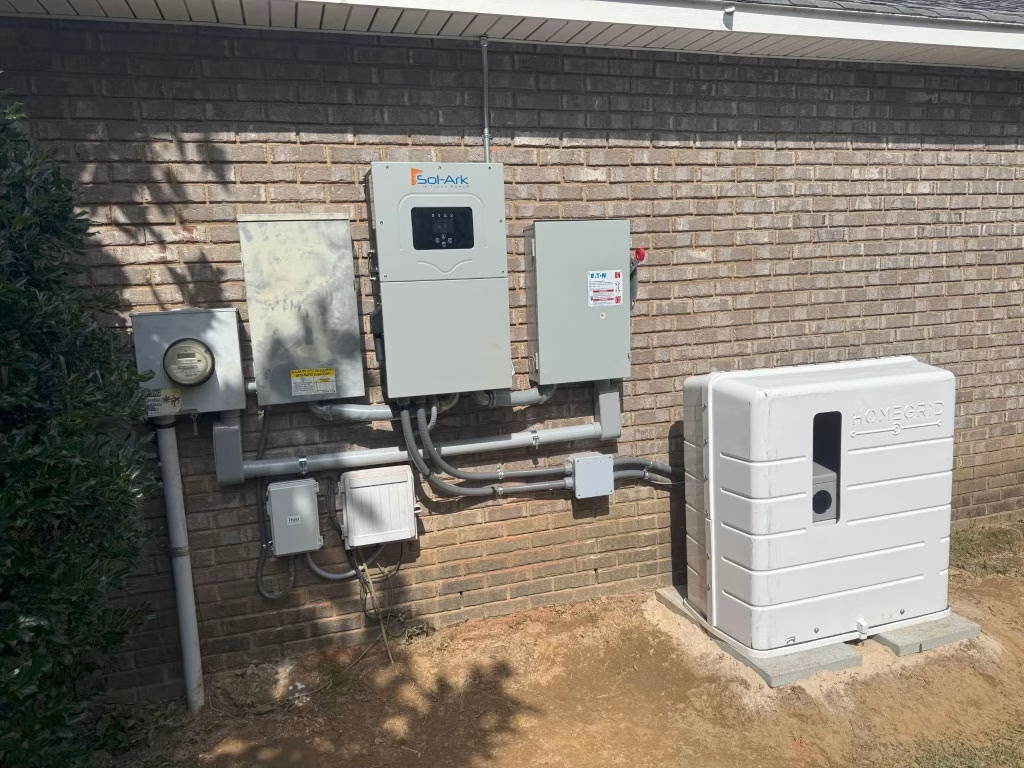 HomeGrid battery systems are designed for projects that need meaningful storage capacity, strong power output, and the ability to expand over time. The HomeGrid Stack’d Series is built for residential and small commercial storage applications, including off-grid cabins, whole-home backup, time-of-use energy management, and larger custom energy systems.
HomeGrid lists the Stack’d Series at up to 14.4 kW continuous output, up to 24 kW surge output for 10 seconds, and up to 38.4 kWh per stack, with the ability to scale much larger when multiple stacks are installed in parallel.
That matters because off-grid homes do not behave like simple backup systems. A true off-grid system has to support refrigerators, well pumps, lighting, communications, security systems, HVAC equipment, water heating, internet, and cooking loads. Some of these loads are steady. Others have heavy start-up surges. The design has to account for both energy capacity and power delivery.
HomeGrid’s modular format gives the system designer more flexibility. A smaller home or cabin may need a modest battery bank. A larger residence with air conditioning, water pumps, or extended autonomy requirements may need multiple stacks. The goal is not to sell the biggest system possible. The goal is to design the right system for how the property actually uses energy.
You can learn more about the Stack’d Series directly on the HomeGrid Storage website.
What Does a HomeGrid Off-Grid System Cost?
There is no honest one-size-fits-all price for an off-grid system. A small cabin and a large custom home are completely different projects. As a practical planning range, most professionally designed off-grid systems fall into these categories.
Small Off-Grid Cabin or Essential Loads System
Estimated range: $25,000–$50,000+
This type of system may support lighting, refrigeration, outlets, internet, small appliances, and limited HVAC or mini-split usage. It is usually built around a smaller solar array, a moderate battery bank, and careful load management. This type of system is unlikely to incorporate a generator and will utilize DC appliances where possible.
Partial Home or High-Resilience System
Estimated range: $40,000–$100,000+
This is a more serious residential energy system. It may support refrigeration, lighting, well equipment, communications, selected HVAC, kitchen circuits, and other prioritized loads. This is often the right category for homeowners who want substantial independence but are willing to manage large loads intelligently. A generator will likely be utilized for backup during extended cloudy periods.
Large Whole-Home Off-Grid System
Estimated range: $120,000–$250,000+
A large custom home with central air conditioning, well pumps, pool equipment, EV charging, large kitchen loads, or multi-day autonomy requirements can require a much larger solar array, multiple battery stacks, multiple inverters, generator integration, advanced load controls, and significant electrical work.
The battery itself is only one part of the cost. Online component pricing for HomeGrid batteries can appear far lower than a completed installed system, but those prices do not include full engineering, permitting, wiring, inverters, controls, labor, commissioning, inspections, racking, solar, generator integration, or long-term support. That is why the lowest equipment price is rarely the right way to judge an off-grid project.
What Drives the Cost of an Off-Grid System?
The cost of an off-grid energy system is shaped by five major factors.
Daily energy usage. A home using 25 kWh per day requires a very different system than a home using 80 kWh per day.
Battery autonomy. If the home needs to operate for one night, the battery requirement is modest. If the goal is two or three days of resilience during storms, cloudy weather, or generator downtime, the battery bank must be much larger.
Surge capacity. Pumps, air conditioners, compressors, and motors can require significant start-up power. The inverter and battery system must be designed to handle those moments without tripping or shutting down.
Solar production. Batteries store energy, but solar produces it. A true off-grid battery backup system needs enough solar to recharge the batteries while also running the home during the day.
Electrical integration. The main service panel, subpanels, transfer equipment, load controls, generator wiring, grounding, disconnects, and code compliance all matter. This is where qualified electricians and experienced solar-plus-storage designers are essential.
Why Quality Matters
Manufacturers often make energy storage look simple. The marketing can make it seem as though a battery is a plug-and-play appliance. The reality is that off-grid power is a serious electrical system. When a system is designed correctly, it feels seamless. The lights stay on. The refrigeration stays cold. The internet remains active. Critical loads are protected. The homeowner understands how the system works.
When a system is designed poorly, the problems usually show up during the exact moment the homeowner needs power most. Undersized batteries drain too quickly. Inverters overload. Air conditioning fails to start. Pumps trip the system. Generators do not communicate properly. Loads are not prioritized. Service becomes difficult because the original design was never properly documented.
Quality is not cheap. But rework is more expensive.
The CKR Solar Approach
At CKR Solar, we design off-grid and high-resilience systems around the home first, not the equipment first. This means we look at the loads, the site, the homeowner’s expectations, the available roof or ground space, the electrical infrastructure, and the desired level of independence. Then we build the system around those requirements.
For some homes, that may mean a HomeGrid battery system paired with a hybrid inverter and a carefully selected critical loads panel. For others, it may mean multiple HomeGrid stacks, generator integration, smart load management, and a larger solar array designed for long-duration independence.
The best system is not always the biggest system. It is the system that is properly engineered, safely installed, serviceable, and realistic for the way the home actually operates.
Is a HomeGrid Off-Grid System Right for You?
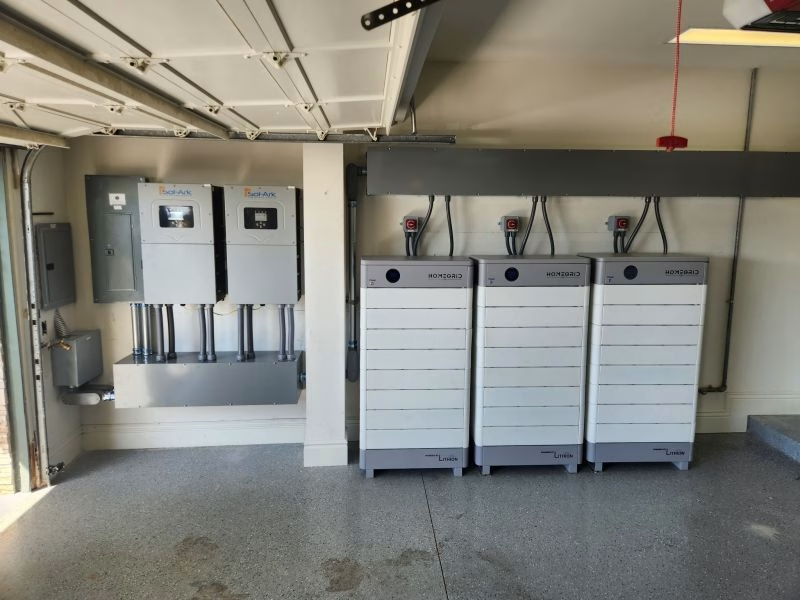 A HomeGrid-based off-grid system may be a strong fit if you:
- Want serious energy independence
- Live in a rural area with unreliable utility power
- Need solar battery storage for a well pump or critical equipment
- Want a scalable battery system that can grow with your needs
- Are building a custom home or remote property
- Want more control over your energy future
- Need a system designed for resilience, not just savings
Off-grid energy is not about buying a battery. It is about designing a home that can produce, store, manage, and protect its own power.
For homeowners who want that level of control, a HomeGrid off-grid system can be an excellent foundation — but the design and installation matter just as much as the equipment. Learn more about how to start living off-grid in Florida and Georgia.
Ready to Price an Off-Grid Energy System?
The only way to price an off-grid system accurately is to design it around your actual home. CKR Solar can evaluate your loads, review your electrical service, assess your solar potential, and design a HomeGrid-based energy system that matches your goals for backup power, resilience, or full off-grid operation.
If you are considering off-grid solar and battery storage, start with the design. The right system begins with understanding what you need to power, how long you need to power it, and how much control you want over your energy future.