
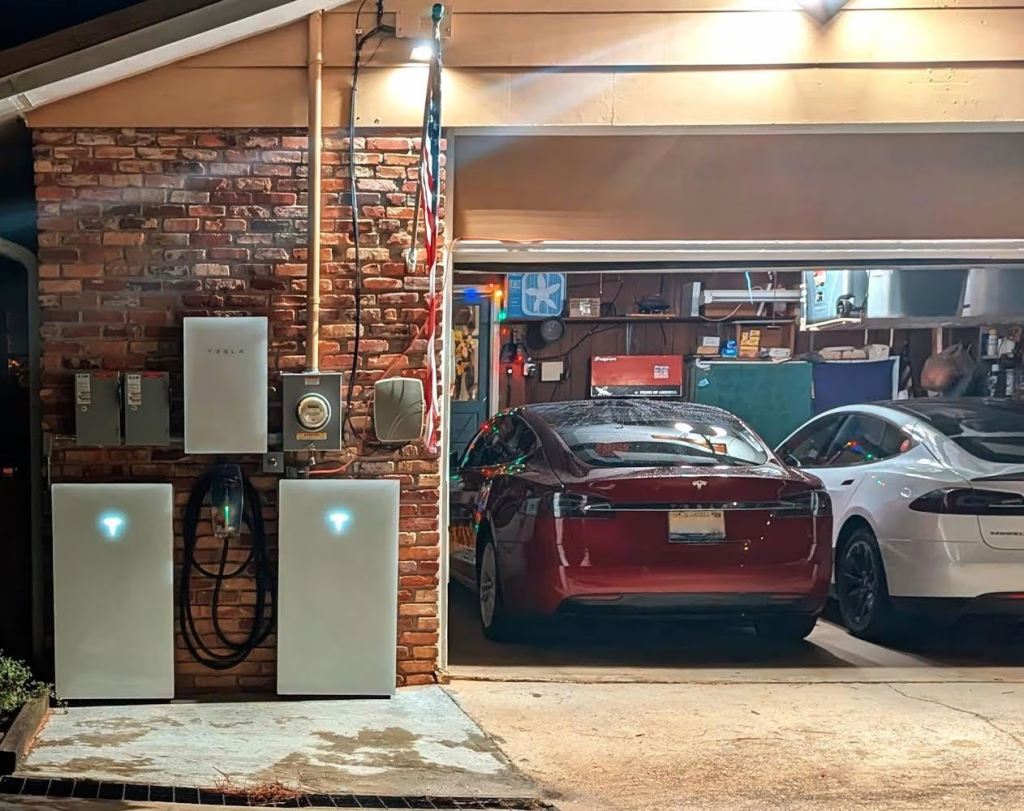
Tampa Bay solar battery backup starts with what you already have installed on your roof. For many homeowners in the area, the first step has already been taken — a solar electric system is already up and running. Unfortunately, most photovoltaic systems are grid-tied only, with no battery backup. That means when the grid goes down, the solar system shuts off too. A grid-tied-only system cannot produce power during an outage, even in full sun.
The good news? If you already have solar, you’re halfway to a great battery backup system, because you already have a fuel source.
The real question is: what type of battery should you add?
The answer depends on more than brand preference or battery size. The right battery backup for your existing solar system depends on your current solar equipment, your utility provider, your home’s electrical loads, and what you actually want the battery to do during an outage.
For Tampa Bay solar customers considering battery backup, the design process should start with a few key questions:
- Are you on Duke Energy Florida, Tampa Electric (TECO), or Withlacoochee River Electric Cooperative (WREC)?
- What solar inverter system do you already have?
- How large is your current solar system?
- Do you want to back up the whole home or only essential loads?
- Do you need to run central AC during an outage?
A battery should never be added casually to an existing solar system. It should be designed around the system you already own and the level of control you want during an outage.
Start With the Existing Solar System
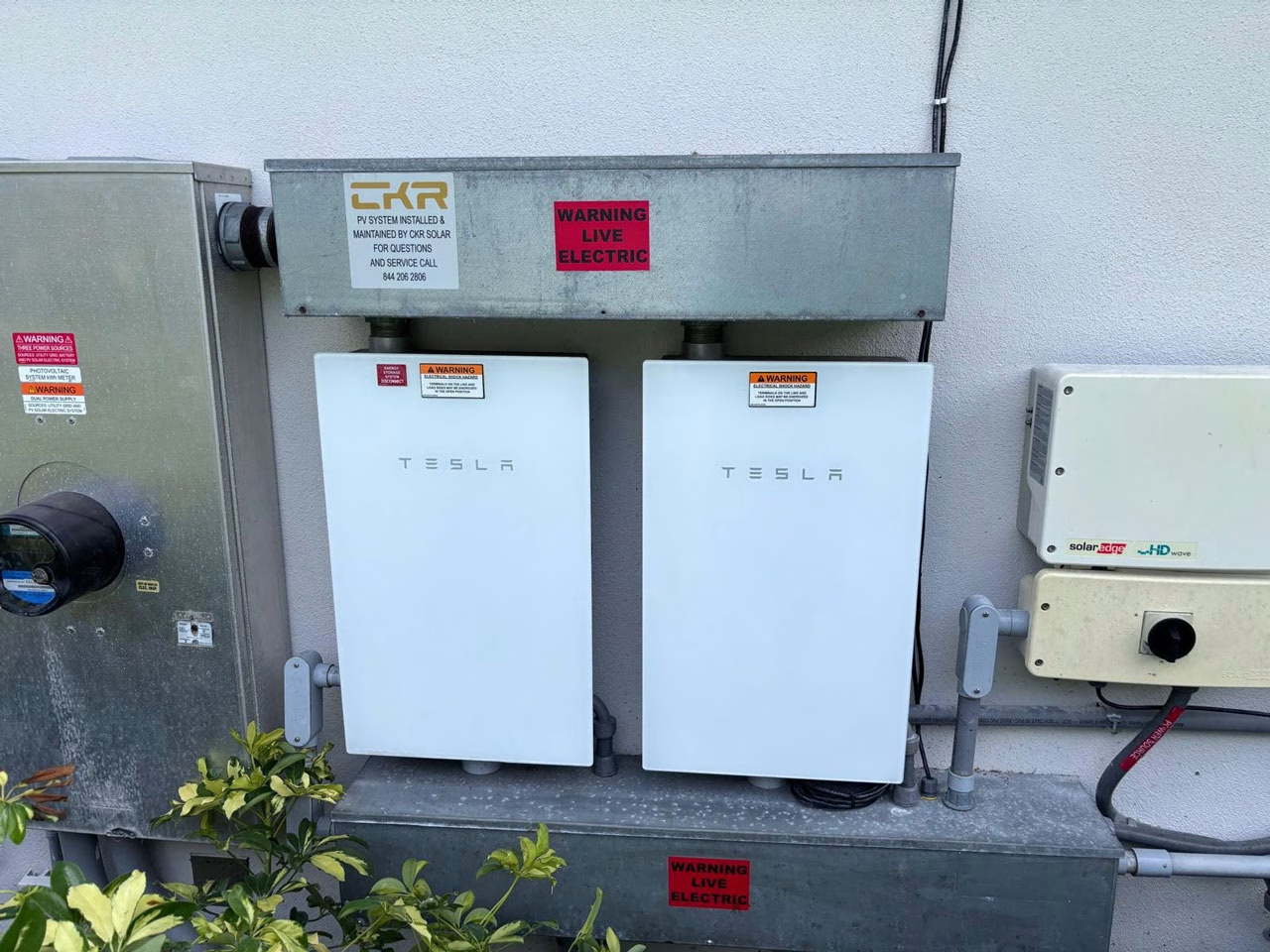 When a homeowner already has solar, that existing system becomes the foundation for the battery design.
The first question isn’t “Which battery is best for my home?” The first question is: what solar inverter system do you already have?
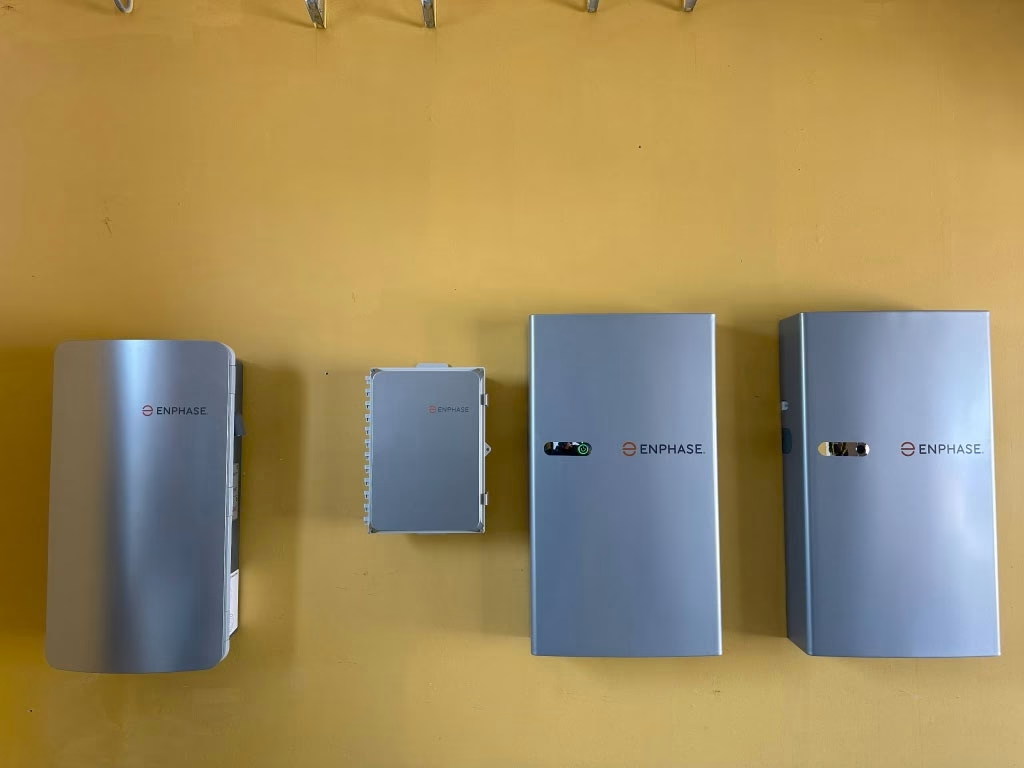
Common systems installed in Tampa Bay over the past decade include:
- Enphase
- SolarEdge
- SMA
Less common systems in the field include:
- Tesla, usually as Delta inverters white-labeled for their systems
- Fronius
This matters because your battery is likely going to need to be AC-coupled, meaning solar power doesn’t flow directly to the battery — it’s tied in through a microgrid interface device or the panel itself. The AC input rating of the battery matters too. For example, a battery with a 7.6 kW AC input can’t accept a 10 kW solar system’s full output.
The existing inverter also shapes which battery approach makes sense. A home with an Enphase or SolarEdge system may have different compatibility considerations than a home with SMA or Fronius equipment. In some cases, if an older inverter has failed and needs replacing anyway, moving to a new integrated solar-and-battery platform can make sense.
Put simply: the battery has to work with the solar system already installed on the home.
The Size of Your Solar System Matters
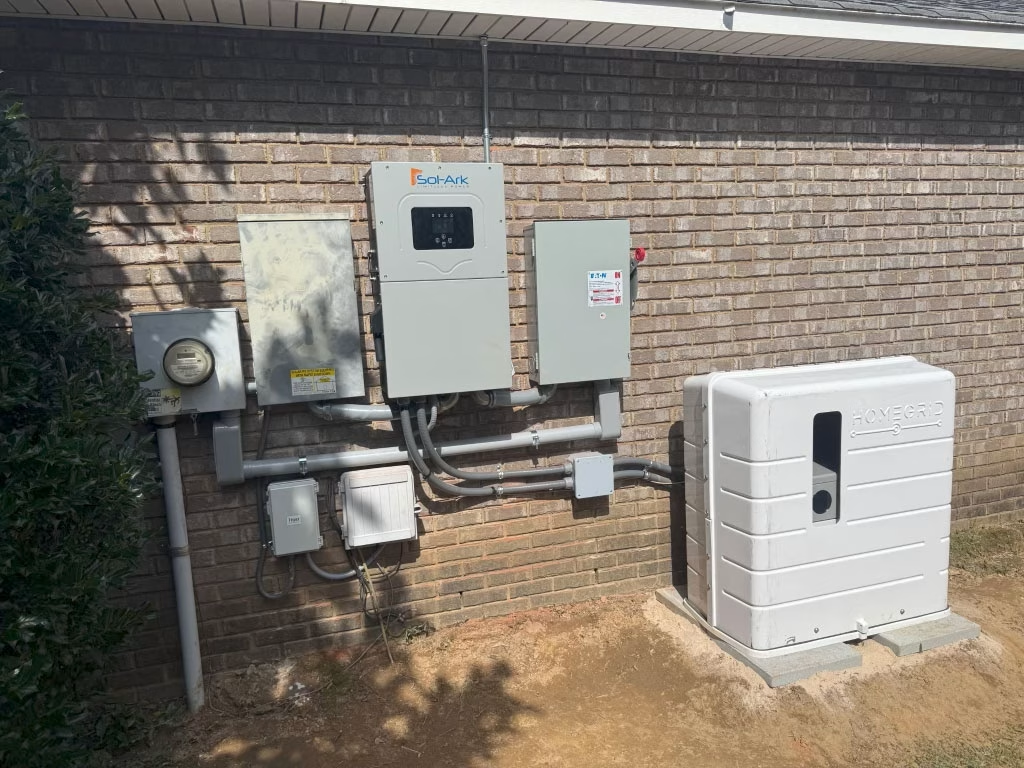 The size of your existing solar array can help determine the right battery size.
A large solar array can typically recharge a larger battery bank more effectively during the day. A smaller solar system can still benefit from batteries, but the design needs to be realistic about how much energy the solar can produce and how quickly the batteries can recharge.
This matters especially for Tampa Bay homeowners planning for hurricane backup power. During an extended outage, the battery is only part of the equation — the solar array becomes the fuel source. If the array is small, shaded, or limited in production, adding a very large battery may not deliver the runtime a homeowner expects.
That doesn’t mean batteries only make sense with large solar systems. It means battery size should match solar production, home loads, and the customer’s goals. A good design balances three things:
Total solar production
Desired battery storage
Total power required for loads
When those three pieces are aligned, the system performs far better.
Know Your Utility Before Adding Tampa Bay Solar Battery Backup
Tampa Bay isn’t served by a single utility company. Depending on your exact address, you may be served by Duke Energy Florida, Tampa Electric (TECO), or Withlacoochee River Electric Cooperative (WREC). Each utility has different interconnection requirements and policies that affect how solar and battery systems are designed — and different storm preparedness and outage-reporting resources worth bookmarking before hurricane season.
A homeowner in Tampa may face a different utility setup than one in Pasco County, Wesley Chapel, Land O’ Lakes, Clearwater, St. Petersburg, Brandon, or nearby communities.
For existing solar customers, the utility also helps determine how the battery should be configured. Across all Tampa Bay utilities, your solar system will continue to net meter, while the battery stores energy for backup power. Some homeowners choose to run more “grid independent,” but most simply configure the battery to store power for outages.
Whole-Home Battery Backup vs. Essential-Load Backup
 Once we understand the existing solar system and utility, the next question is what you want to back up. Most Tampa Bay homeowners want whole-home battery backup to support most of the house during an outage. Because Florida summers are hot, HVAC becomes central to this decision — and it’s also one of the heaviest loads on the system.
Others prefer to focus only on essentials:
- Refrigerator
- Freezer
- Lights
- Internet
- Security system
Both approaches are valid. Essential-load backup is often more efficient and cost-effective, focusing the battery on the circuits that matter most and extending runtime during an outage. Whole-home backup offers more convenience but typically requires more battery capacity, more inverter power, and more thoughtful load management.
A homeowner may assume that adding one battery to an existing solar system means the entire home runs normally during an outage. That’s not always true — heavy loads like central air conditioning, electric water heaters, pool pumps, ovens, dryers, and EV chargers all need to be evaluated before promising whole-home backup.
Do You Need to Run Central AC?
 In Tampa Bay, this is one of the biggest questions. During hurricane season, backup power isn’t just about lights and refrigeration — many homeowners also want air conditioning.
Running central AC from a battery system is possible, but it has to be designed properly. The size of the AC unit, the starting load, the compressor type, and the battery inverter’s capacity all matter. A battery that easily runs lights, internet, refrigerators, and outlets may still struggle to start a large central air conditioner.
If central AC is part of the goal, we need to know:
- The size of the AC unit
- The starting load
- Whether you want to run one AC unit or multiple units
- Whether load management is needed
- Whether the existing solar system can recharge the batteries fast enough
In many cases, the smartest solution isn’t simply adding more batteries — it’s a combination of battery capacity and intelligent load management. That’s why a SPAN smart panel can be so valuable: instead of trying to power everything at once, the system prioritizes the most important loads and prevents unnecessary equipment from draining the battery.
Is the Goal Hurricane Backup Power?
Most Tampa Bay solar customers who add batteries fall into one of two categories.
1. Hurricane Backup
These homeowners want power when the grid goes down, with a focus on resilience, runtime, and keeping the most important parts of the home operating during storm season — outages that can last over a week. For hurricane backup power, the design typically covers essential loads plus a few non-essentials for comfort:
- Refrigeration
- Lighting
- Internet
- Garage access
- Security systems
- Medical equipment
- Limited HVAC
For many homeowners, the goal isn’t to live exactly as they would on grid power — it’s to maintain control, comfort, and safety while the utility is down.
2. Short-Term Outages
Some homeowners care less about extended outages and more about the shorter, more common ones lasting an hour or two. Remote workers, for example, may want to keep internet and office lights running without worrying about HVAC for a couple of hours. A smaller battery system can be a cost-effective solution here — but there are limits.
Some installers install a single battery and call it “whole-home backup.” We were recently called to fix a non-functioning inverter in Land O’ Lakes, and while doing the work, discovered the customer’s swimming pool was wired into their backup loads panel. That meant the entire battery system would shut down during an outage because it couldn’t handle all the connected loads at once. By moving the pool circuit out of the backup panel and into a non-backup subpanel, the home now runs seamlessly during short-term outages.
Battery Options for Tampa Bay Solar Battery Backup Systems
For Tampa Bay homeowners adding batteries to an existing solar system, there are several common design paths.
AC-Coupled Battery Systems
AC-coupled batteries are often used when adding storage to an existing solar system, since they leave the existing solar infrastructure in place and add a separate battery system. These systems work well for retrofits because they connect on the AC side of the home’s electrical system.
Most Tampa Bay solar installations use Polaris taps on the supply side of the main service panel, or occasionally a load-side tap — a method that avoids costly main panel upgrades that a PV breaker might otherwise require. Since all PV systems should have a disconnect between the point of interconnection and the inverter or combiner panel, that disconnect can become the new connection point for the battery system, as long as the solar system’s AC output is within the battery’s AC input limit.
Some AC-coupled setups use a microgrid interface device with separate inputs for solar, a generator, and battery storage — giving you a way to use your existing solar, add a battery, and integrate a generator now or in the future, all without replacing what’s already on the roof.
Manufacturer-Specific Battery Systems
Some solar systems are best paired with a battery from the same ecosystem as the existing inverter, depending on the equipment and the homeowner’s goals. The tradeoff with staying inside an existing manufacturer’s ecosystem is that it usually still requires the same upgrades most battery systems need, and compatibility depends heavily on the exact equipment already installed. For homeowners who want a unified, single-brand system built specifically for whole-home backup, moving to an integrated solar-and-battery platform is often the more future-proof route.
Hybrid Inverter Solutions and Repowered Solar
If your solar system is around the 10-year mark, the inverter is likely out of warranty. That can be a good time to remove some existing solar infrastructure and install a new hybrid inverter integrated with the battery system — reusing your existing panels and racking while replacing the inverter with one built for both solar and battery. One example: in Clearwater, we installed a new Tesla Powerwall 3 system using the homeowner’s existing solar modules.
“My solar journey started back in 2016 with Chris Rollitt as my consultant, and he immediately felt like a trusted friend. Back then, battery backups were still cutting-edge and I wasn’t ready to take the plunge… CKR Solar integrated additional solar panels and two Tesla Powerwall 3s, all tied together with a cutting-edge SPAN smart breaker system. For my household, this investment means absolute security during a grid collapse or a major Florida hurricane. We live within the city limits and are required to stay grid-tied, but since the installation, our electric bill has never been more than the baseline connection fee.”
In some cases, a hybrid battery design makes sense — especially for homeowners who want more flexibility or a more advanced backup configuration. Hybrid systems can be powerful, but they require careful design by qualified electricians who understand solar, batteries, utility rules, and backup power systems.
Battery Backup With Load Management
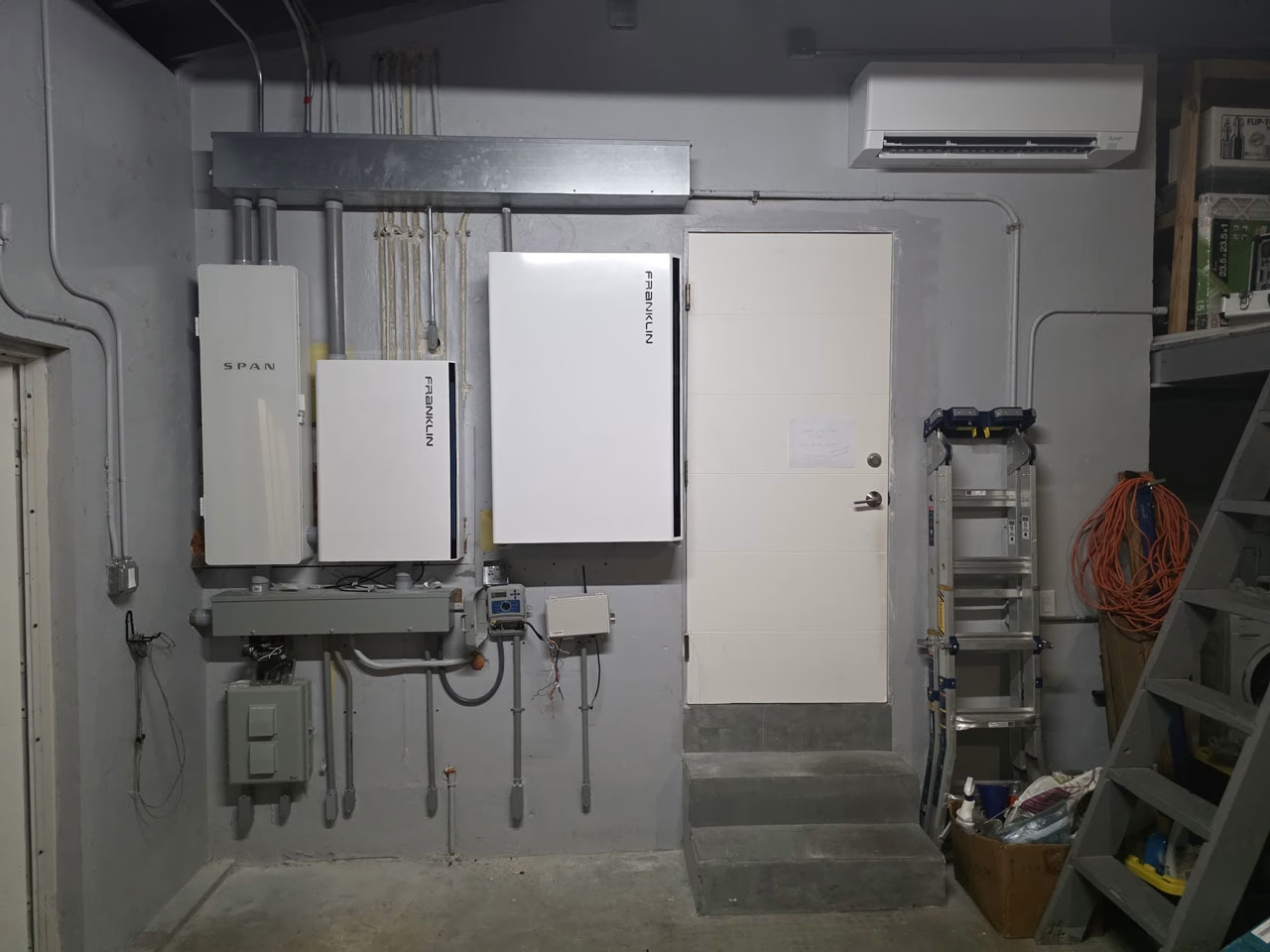
For homeowners who want to back up larger portions of the home, load management is often one of the most important design decisions. Rather than oversizing the battery system to run everything at once, load management lets the home’s electrical panel prioritize what matters most. The SPAN Smart Panel, for example, supports up to 48 circuits of backup power, each programmable as “essential,” “nice to have,” or “not required.” That means a home can run on batteries without the risk of draining them to a critical level — making the system more practical, efficient, and useful during extended outages.
Why Bigger Isn’t Always Better
A larger battery isn’t automatically a better battery. A battery system has to be matched to the existing solar system, inverter capacity, home electrical loads, and the homeowner’s expectations. That said, no one has ever said “I have too much battery backup” — it’s far more common for a battery system to be undersized or sold with unrealistic expectations.
Two important concepts to understand:
Battery capacity is how much energy the battery can store.
Battery power is how much energy the system can deliver at one time.
A home may have enough battery capacity to last several hours but not enough power to start a large AC unit. Or a home may have a large battery bank paired with a small solar system that can’t recharge it quickly enough during an extended outage. That’s why the size of the existing solar system matters — battery sizing should never happen in isolation. It should be based on solar production, backup loads, expected runtime, and the utility connection.
Questions to Ask Before Adding Batteries
- Which utility serves my exact address?
- What inverter system do I currently have?
- How large is my existing solar system?
- How much solar production do I have available to recharge batteries?
- Do I want backup power for a couple of hours or a couple of weeks?
- Do I want whole-home backup or essential-load backup?
- Do I need to run central AC during an outage?
- Do I need load management?
- Do I want generator integration?
- Is the system being designed for current needs or future expansion?
The answers to these questions determine the right battery design for your home.
The CKR Solar Approach to Tampa Bay Solar Battery Backup
At CKR Solar, we don’t believe in adding batteries as an afterthought.
For Tampa Bay solar customers with existing systems, we start by reviewing what’s already installed — the inverter, solar array size, electrical panel, utility, backup goals, and available space for new equipment.
For some homes, the right answer is an essential-load battery system. For others, it’s whole-home backup with load management. Some homeowners need a battery that works within their existing inverter platform; others benefit from a more flexible hybrid design like Tesla Powerwall 3 paired with a SPAN Smart Panel.
The goal isn’t simply to add batteries — it’s to make the existing solar system more useful, more resilient, and better aligned with how the homeowner actually lives. Budget matters too: a Tesla Powerwall 3 system can cost around $14,500, though most customers like knowing they can expand their system in the future.
Frequently Asked Questions About Tampa Bay Solar Battery Backup
Can I add a battery to my existing solar system in Tampa Bay?
Yes. Most existing solar systems can be paired with a battery, typically through an AC-coupled setup, a matching-ecosystem battery, or a hybrid inverter replacement — the right path depends on your current inverter and equipment.
Will a battery back up my whole house during an outage?
It depends on the battery’s power rating and your home’s loads. Whole-home backup is possible but usually requires more capacity, more inverter power, and load management to handle heavy loads like central AC.
How long will a solar battery last during a hurricane outage?
Runtime depends on battery capacity, your solar system’s ability to recharge it, and which loads are connected. A well-designed system balances all three to meet realistic runtime expectations.
Do I need a whole new inverter to add a battery?
Not always. Many homes use AC-coupled batteries that work alongside the existing inverter. A new hybrid inverter is usually only needed if the current inverter is near end of life or the homeowner wants a fully integrated system.
Final Thought
If you already have solar in Tampa Bay and are thinking about adding batteries, the best place to start isn’t a battery brand — it’s the system you already own.
What inverter do you have?
How large is your solar system?
Which utility serves your address?
What do you want to keep running during an outage?
Do you need central AC?
Are you trying to improve hurricane resilience for a long-term outage?
Once those answers are clear, the right battery backup design becomes much easier to determine.
For Tampa Bay solar customers, batteries can turn an existing solar system into something more powerful — not just a way to produce energy, but a way to stay in control when it matters most.