
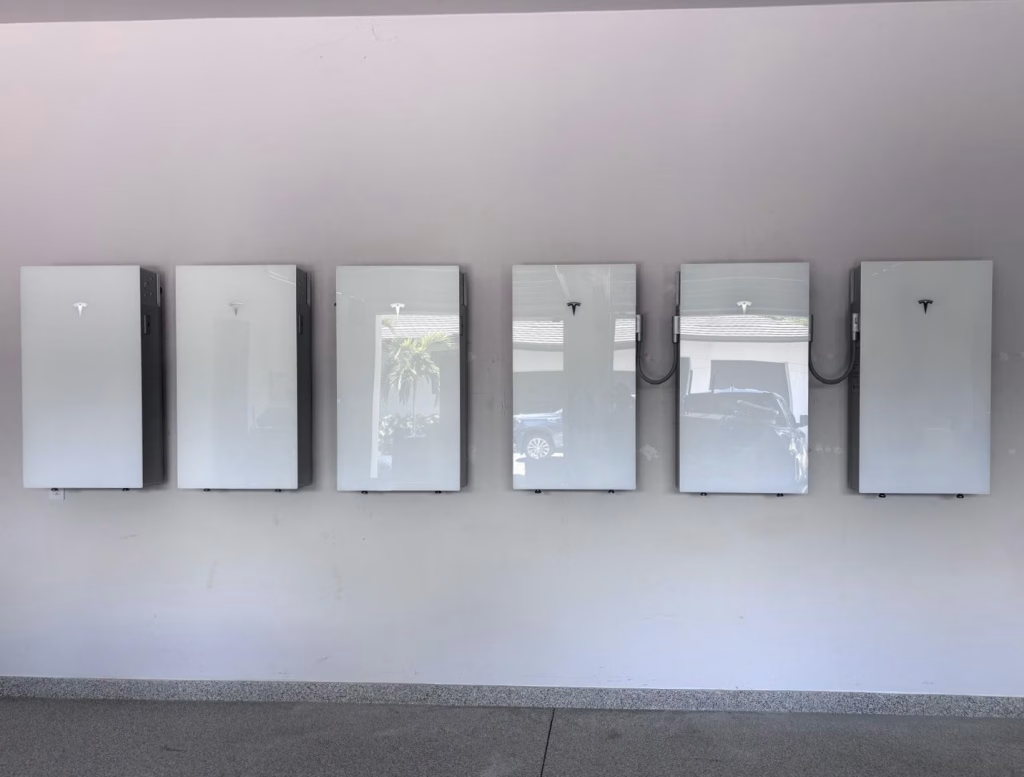
One of the most common questions we get at CKR Solar is:
“How much does a Tesla Powerwall 3 actually cost?”
The simplest answer is that the battery price is only one part of the cost.
A real Tesla Powerwall 3 backup system includes the Tesla battery, Tesla Gateway 3, disconnecting equipment, fuses or breakers, metering, surge protection, copper wiring, conduit, electrical boxes, permitting, engineering, inspections, commissioning, and the labor of qualified electricians.
That is why two homeowners can both ask for “one Powerwall” and receive very different prices. The cost depends on the service size, the home’s electrical layout, the loads being backed up, the distance between equipment, the utility requirements, the AHJ requirements, and the quality of the final installation.
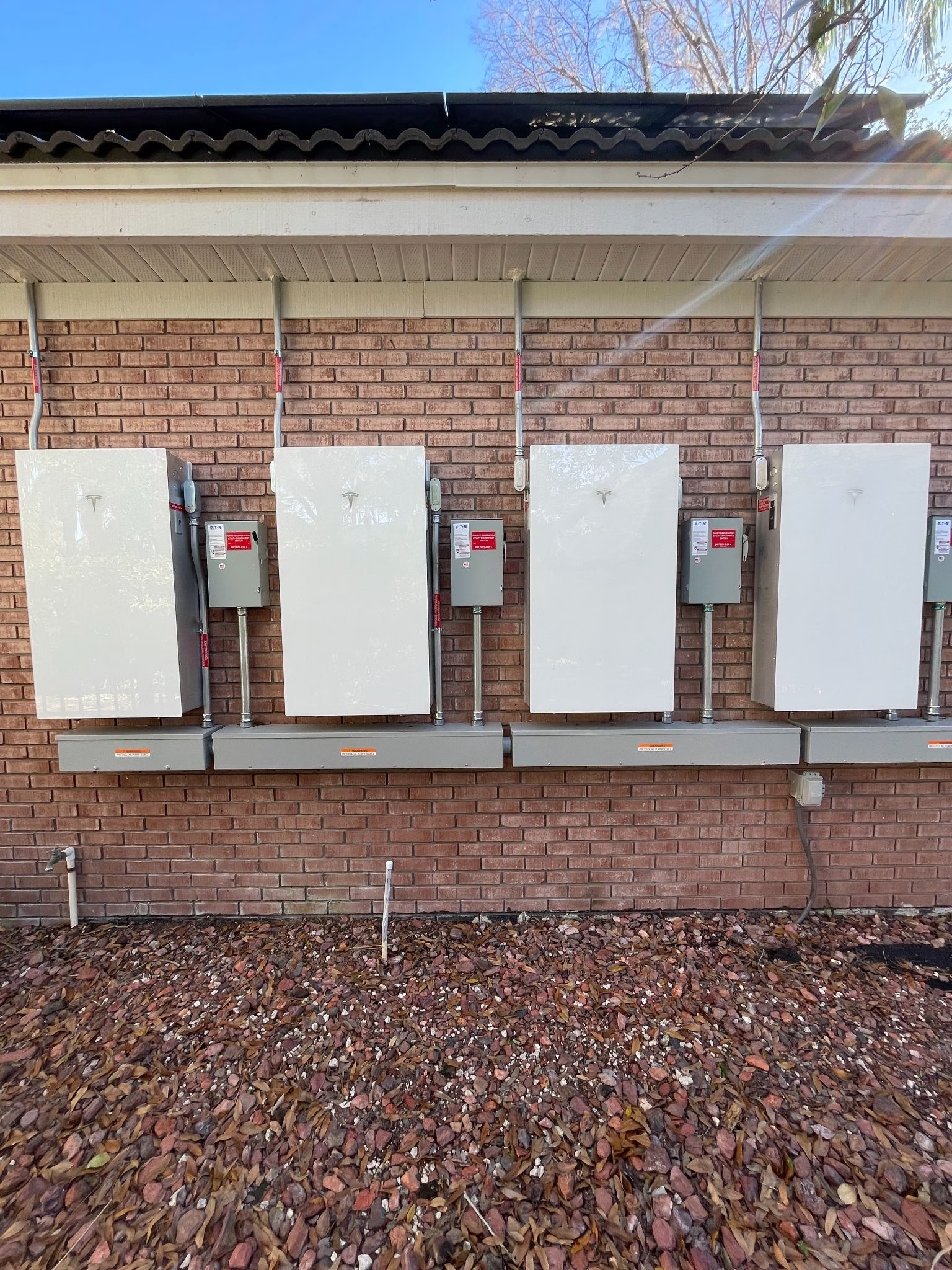 At CKR, we do not view a Powerwall installation as simply mounting a battery on the wall. We view it as designing long-term backup infrastructure for the home.
The Battery Price Is Not the Installed Price
The current equipment price we are using for the Tesla Domestic Powerwall 3 in the United States is
Tesla (Domestic) Powerwall 3: $7,699 before tax
That number is important, but it is not the installed cost.
Powerwall 3 is a strong residential battery platform. The Tesla Powerwall 3 has 13.5 kWh of nominal battery energy and configurable AC output options up to 11.5 kW. Tesla also documents a configurable off-grid discharge mode up to 15.4 kW, but only when the system is properly configured with the required on-grid rating, an 80-amp breaker, sufficient solar conditions, and appropriately sized conductors.
That means one Powerwall 3 can do a lot. However, the battery still has to be connected safely, isolated from the grid during an outage, inspected, commissioned, and integrated into the home’s electrical system.
That is where the rest of the cost comes in.
Current CKR Core Equipment Pricing for a Single Powerwall 3
Below is the current core equipment pricing we are using for a basic single Powerwall 3 system.
| Item | Quantity | Rounded Unit Cost |
| Tesla Domestic Powerwall 3 | 1 | $7,699.00 |
| Tesla Gateway 3 | 1 | $925.00 |
| Tesla Remote Meter | 1 | $250.00 |
| Fused disconnect | 1 | $473.00 |
| Fuses | 2 | $29.00 |
| Core equipment subtotal | $9405.00 |
That $9,405 subtotal is only the core equipment listed above. It does not include tax, breakers, surge protection, copper wire, conduit, electrical boxes, labels, fittings, mounting materials, labor, engineering, permitting, inspections, commissioning, or overhead.
So when someone sees a battery price online, it is important to understand that the installed system is much more than the battery.
What the Gateway 3 Does
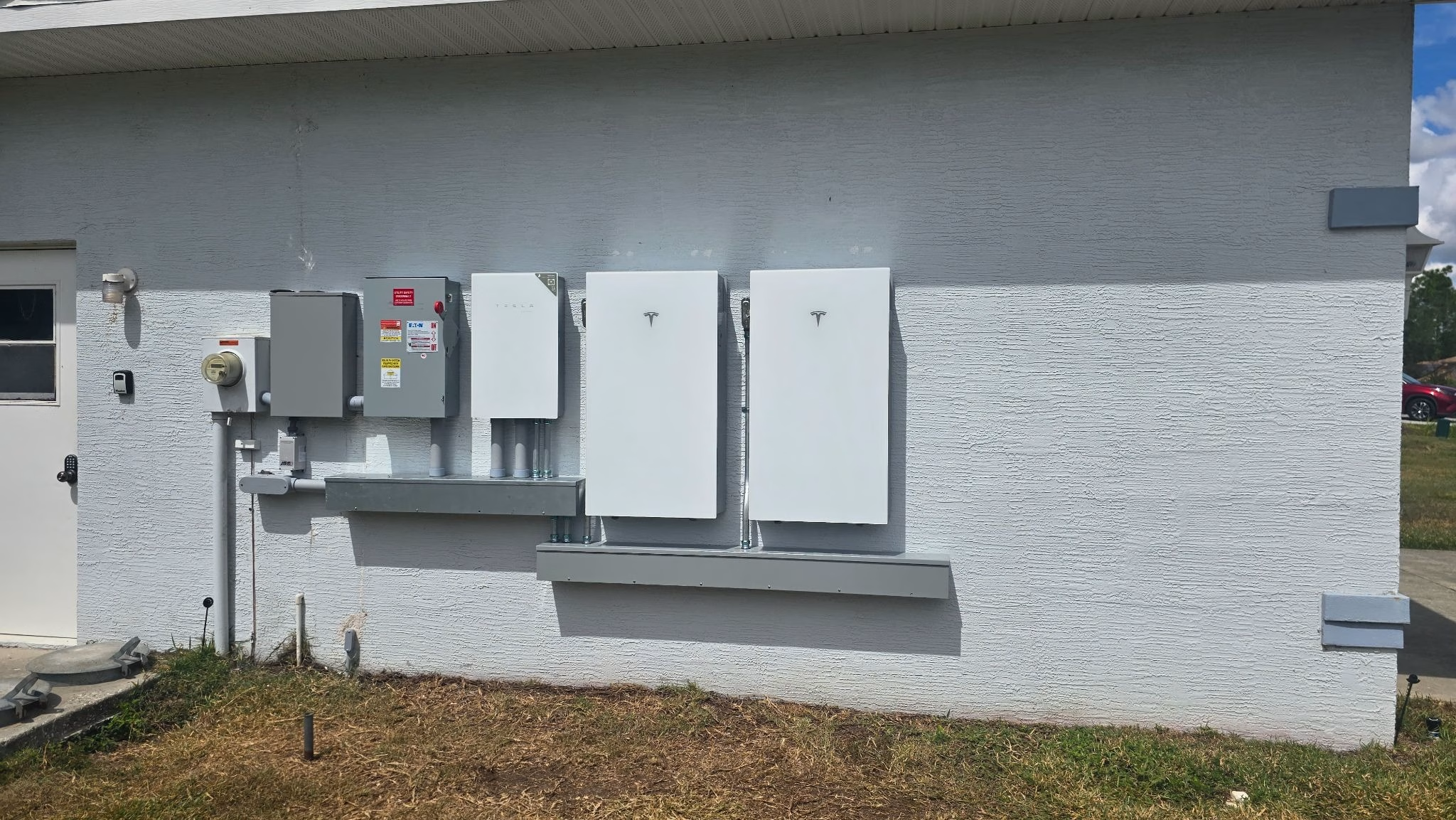 For most Powerwall backup systems, the Tesla Gateway 3 is a critical part of the design.
In simple terms, the Tesla Gateway is the device that allows the backed-up portion of the home to safely disconnect from the utility grid during an outage. Once isolated, the Powerwall system can power the home without backfeeding the grid.
Tesla lists Gateway 3 with a 200-amp continuous current rating, automatic backup transition, and an internal 200-amp, 8-space / 16-circuit panelboard. The Gateway 3 is service-entrance rated when installed with the appropriate overcurrent protection and in compliance with local code requirements.
For a common 200-amp service, especially here in Florida, a single Gateway 3 can often work well. The service can be routed through the Gateway, and the backed-up main panel can be fed from it.
But once the home has a 400-amp service, split service, multiple panels, or larger backup expectations, the design becomes more complex.
Other Materials That Change the Final Price
The core equipment is only the starting point. A Powerwall 3 installation may also require several additional items depending on the design.
| Item | Pricing Treatment | Why It Matters |
| 80-amp 2-pole breaker | Site-specific allowance | May be used for certain Powerwall 3 configurations, including higher off-grid output designs with appropriate conductors. |
| 20-amp 2-pole breaker | Site-specific allowance | May be used for auxiliary or metering circuits depending on the system design. |
| 60-amp 2-pole breaker | Site-specific allowance | Often relevant to default Powerwall 3 overcurrent protection configurations. |
| 200-amp Eaton main breaker | Site-specific allowance | May be needed when the Gateway 3 is installed as service equipment. |
| Surge protection device | Site-specific allowance | Required or recommended depending on service equipment, adopted code cycle, and AHJ requirements. |
| Solar disconnect | About $150 installed allowance | Needed in some AC-coupled solar designs or utility-required layouts. |
| 3/0 copper service conductors | Priced by run length | Large copper conductor cost changes significantly depending on equipment placement. |
| Electrical boxes, conduit, fittings, labels, and mounting hardware | $500+ allowance depending on layout | Clean routing, proper spacing, serviceability, and aesthetics require more than the visible battery. |
This is one reason the same battery can cost more in one home than another. If the meter, Gateway, panel, and battery are close together, the installation may be relatively simple. If the equipment has to be spread out, if the conduit path is difficult, or if the customer wants a cleaner aesthetic layout, the cost increases.
Labor, Permitting, Engineering, and Commissioning
At CKR, Powerwall systems are installed by experienced electricians. A straightforward installation generally requires two people.
For example:
| Cost Driver | Assumption | Rate | Rounded Cost |
| Electrician labor | 2 electricians × 6 hours | $185/hour | $2,220 |
| Engineering | Project-dependent | Varies | |
| Permitting and inspection coordination | Project-dependent | Varies | |
| Commissioning and customer handoff | Project-dependent | Varies |
The labor example above is only the field labor for a straightforward installation. It does not include every hour involved in designing the system, preparing the permit, coordinating inspections, commissioning the equipment, documenting the project, or supporting the customer after installation.
That is why a single Powerwall project cannot be accurately priced by simply adding a small labor number to the battery cost.
So What Does One Powerwall 3 Actually Cost Installed?
Using the current core equipment subtotal of $9,405, plus field labor of approximately $2,220, the project is already at $11,625 before tax, breakers, surge protection, copper wire, conduit, boxes, fittings, labels, permitting, engineering, inspections, commissioning, and overhead.
That is why a very simple single Powerwall 3 installation may start around:
$14,500+
However, a cleaner and more complete real-world installation will often land higher. For many homes, a more realistic planning number for a single Powerwall 3 installation is:
$15,000 to $18,000+
If the home needs load management, longer wire runs, AC-coupled solar integration, service-equipment changes, aesthetic upgrades, or more complicated permitting, the installed cost can move into the:
$18,000 to $22,000+ range
These are planning numbers, not universal prices. The final number depends on the home.
Why Some Powerwall Prices Look Lower
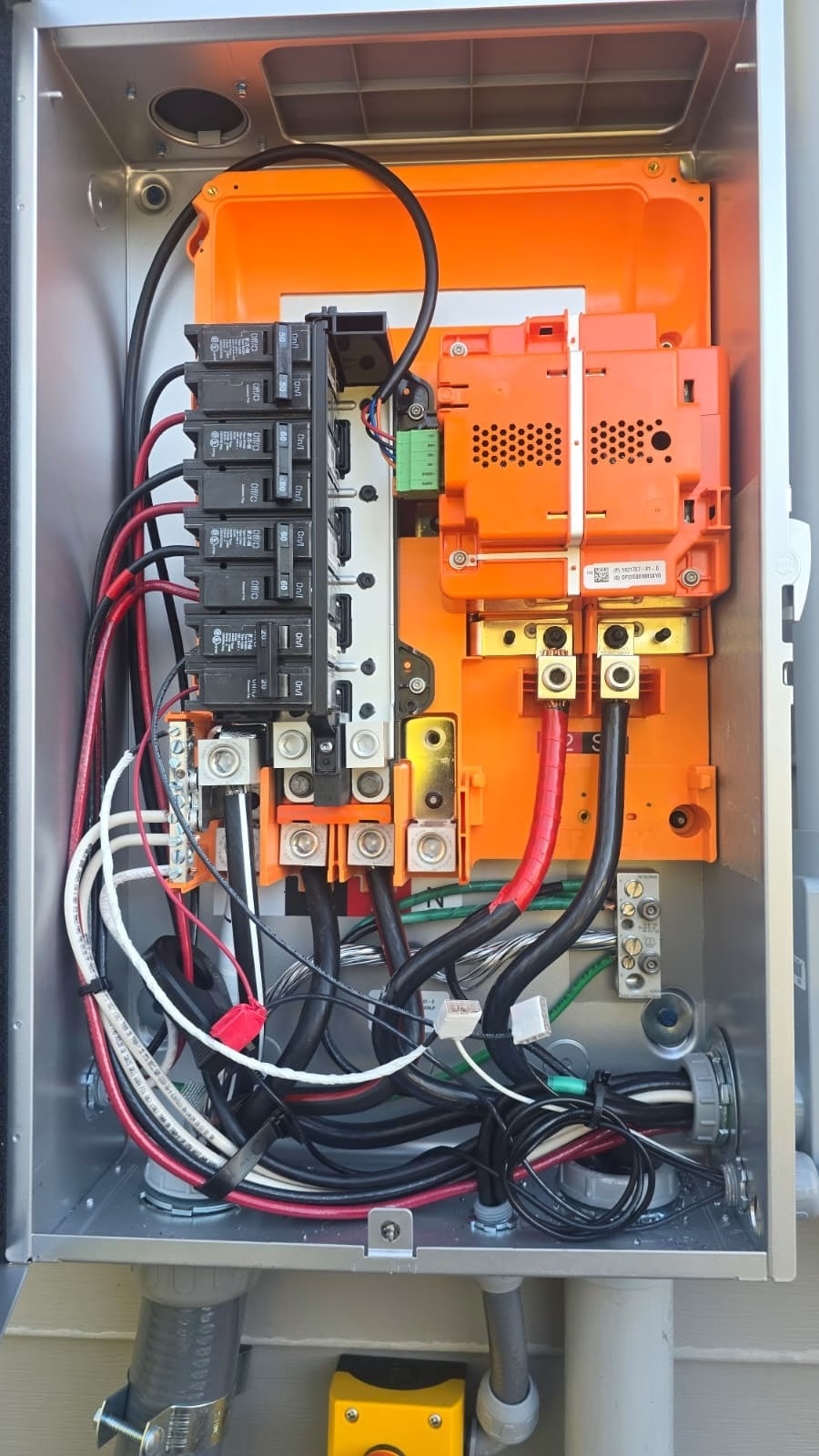
Homeowners sometimes see lower Powerwall pricing advertised by other companies. There are a few reasons for that.
Sometimes the battery is sold together with solar, and the pricing is blended into the larger solar contract. Sometimes the installer is using the Powerwall 3’s integrated inverter for the solar array, which can reduce some equipment costs. Sometimes the quoted number assumes the easiest possible installation. Sometimes it does not include the full electrical scope.
At CKR, we prefer to be clear about what is included.
A lower price is not helpful if the system is not designed correctly, if important equipment is excluded, if the installation is difficult to service, or if the homeowner later discovers that the system does not perform the way they expected during an outage.
Backup Switch and Utility Approval
Tesla also offers the Tesla Backup Switch, which is designed to install behind the utility meter and simplify some backup installations. Tesla states that Backup Switch can reduce installation time by more than six hours in some cases and can avoid some of the rewiring normally required in certain meter-main configurations.
However, Backup Switch approval is utility-dependent.
That is important in our market. In some territories, such as OUC territory in Orlando, a meter-collar style solution may be available. In many other areas, we cannot assume that the Backup Switch is approved, so the system is typically designed around Gateway 3 or another approved configuration.
That utility-specific detail can significantly affect the installed cost.
Should You Add a Second Powerwall 3?
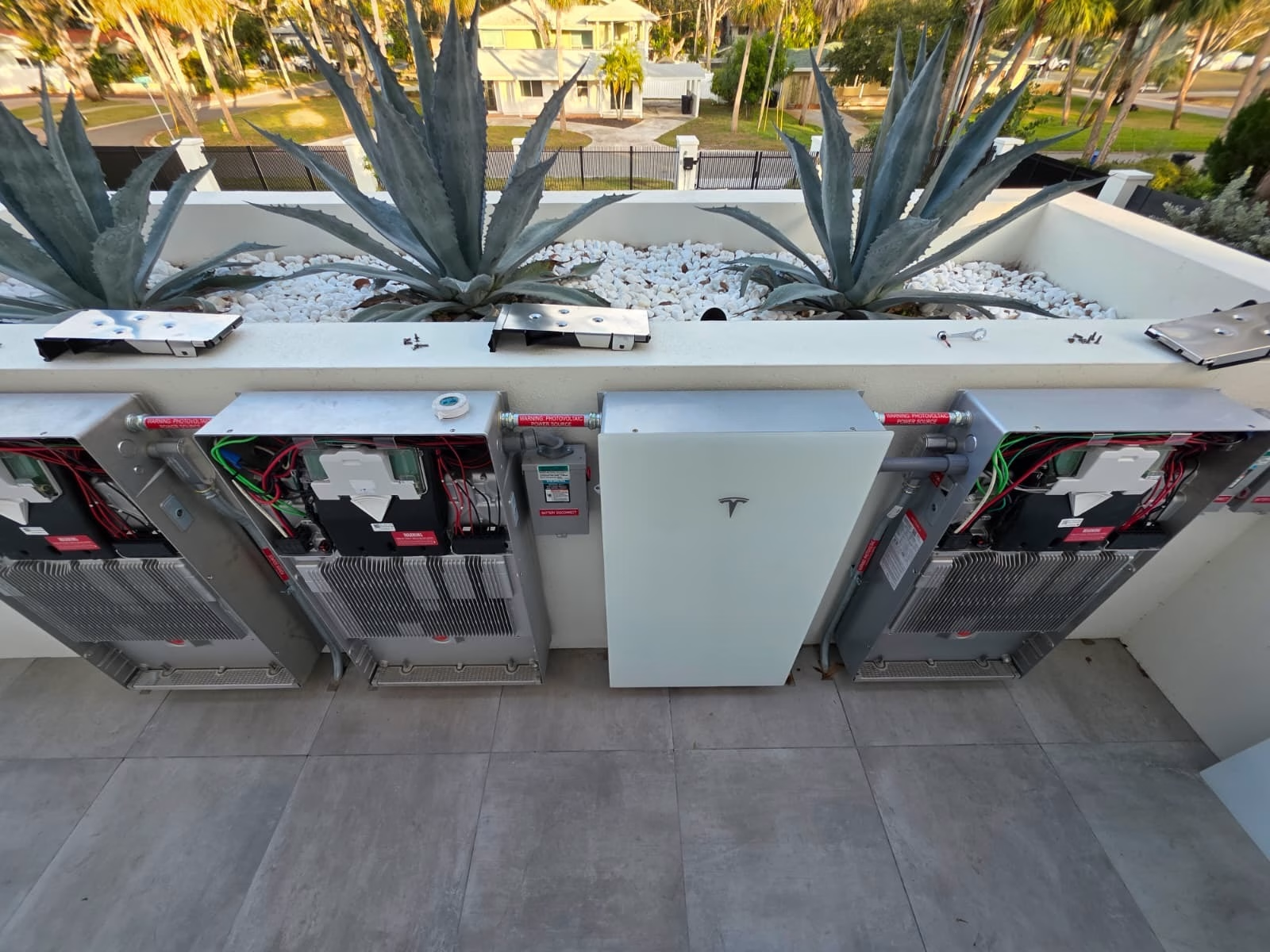 A single Powerwall 3 has strong output, but it still has 13.5 kWh of storage. In Florida and the Southeast, heavy loads can use that energy quickly.
Air conditioning, pool pumps, electric water heaters, ovens, dryers, EV chargers, and well pumps can all change the backup experience. A single Powerwall may be enough for essential loads, but it may not be enough for a homeowner who expects the entire home to operate normally during an extended outage.
Adding a second Powerwall 3 adds both more storage and more inverter output. Some infrastructure from the first Powerwall may already be in place, such as the Gateway, but the second battery still adds equipment, conductors, mounting, layout planning, commissioning time, and labor.
A second Powerwall is not simply “another battery on the wall.” It changes the system design.
What About Powerwall 3 DC Expansion Units?
Tesla Powerwall 3 can also be paired with DC Expansion units. These are useful when the homeowner needs more storage capacity but does not necessarily need another full inverter.
Tesla lists each Powerwall 3 Expansion unit with 13.5 kWh of nominal battery energy. Tesla also states that Expansion units are compatible only with Powerwall 3 and can be wall-mounted or floor-mounted, with stacking available for floor-mounted configurations.
Current CKR pricing for one DC Expansion addition is:
| Item | Quantity | Rounded Unit Cost | Rounded Line Total |
| Tesla Powerwall 3 DC Expansion Unit, Made in U.S. | 1 | $5,873 | $5,873 |
| Stacking kit | 1 | $113 | $113 |
| DC harness | 1 | $97 | $97 |
| Expansion equipment subtotal | $6,083 |
That means the rounded equipment subtotal for one DC Expansion addition is:
$6,083 before tax and labor
A DC Expansion unit adds storage capacity, but it does not add inverter output the same way another full Powerwall 3 does. That distinction matters.
If the home needs more runtime, a DC Expansion unit may make sense. If the home needs more power output to support heavier loads, another full Powerwall 3 may be the better design choice.
Why Load Management Matters
For many single Powerwall 3 systems, CKR recommends load management.
A battery backup system is not only about how much energy you store. It is also about how intelligently the home uses that energy during an outage.
With one Powerwall, heavy loads can drain the battery quickly. A smart panel or load management system can shed nonessential loads and preserve runtime for the circuits that matter most: refrigerator, freezer, lights, internet, outlets, bedrooms, medical equipment, and other essentials.
In some homes, load management can be more valuable than simply adding another battery. It does not create more stored energy, but it helps the homeowner use the stored energy more intelligently.
That is why a properly designed load-management system can sometimes feel like the equivalent of adding another Powerwall, especially during an outage.
AC-Coupled Solar vs. Using the Powerwall 3 Inverter
Powerwall 3 includes an integrated solar inverter, which can make certain solar and storage designs more cost-effective. In some projects, using that integrated inverter can reduce equipment and installation costs.
At CKR, we still look carefully at serviceability and resiliency.
For some single-battery systems, we prefer AC-coupled solar using microinverters. That approach may cost more, but it can improve the overall resiliency of the system. If one part of an AC-coupled solar system has an issue, the entire solar and storage system may not be dependent on one integrated DC path.
Powerwall 3 is a powerful product, but it is also an integrated product. The lowest-cost design is not always the best long-term design.
Why 400-Amp Whole-Home Backup Costs More
A 400-amp service is a different conversation.
Many larger homes have a 400-amp service that is effectively split into two 200-amp sections or two main panels. If the homeowner wants whole-home backup, both sides of that service have to be addressed.
That often means more equipment, more wiring, more labor, and more design time.
| 400-Amp Design Component | Why It Matters | Cost Impact |
| 400-amp meter-main or service rework | Many 400-amp homes are split into two 200-amp sections, which may require new or reorganized service equipment. | High |
| Two Tesla Gateway 3 units | Whole-home backup on both sides of a split service generally requires isolation and control for each backed-up service section. | High |
| Multiple Powerwalls and/or DC Expansion units | One side of the service may support lighter essential loads while the other supports heavier loads like HVAC. | High |
| Larger copper conductors and conduit | Higher-amperage service work and longer equipment runs increase material and labor. | High |
| Load grouping and load management | Separating lighter loads from heavier loads improves runtime and helps the system behave the way the homeowner expects. | Medium to high |
| Additional permitting, inspections, and commissioning time | The design has more equipment, more interconnection points, and more inspection requirements. | Medium to high |
In many 400-amp designs, our preference is to think of the home in two categories.
The first category is lighter essential loads: outlets, lights, refrigerator, freezer, internet, bedrooms, and other critical circuits.
The second category is heavier loads: air conditioning, pumps, larger appliances, and other high-demand equipment.
In some homes, it may make sense to put a smaller battery system on the lighter-load side and a larger battery system on the heavy-load side. That way, the essentials have strong runtime, while the heavier-load side is designed around the equipment that actually needs more power.
This is especially important in retrofit work, where we are designing around the existing meter location, panel layout, utility requirements, wall space, conduit paths, and the way the home was originally wired.
A 400-amp whole-home backup system is not simply double the price of a 200-amp system. It is usually a different electrical design.
Workmanship Is Part of the Cost
Battery systems are expensive. They should look and perform like professional electrical infrastructure.
At CKR, we hold every installation to a high standard of workmanship. That means ensuring the battery is mounted level, the conduit is cleanly routed, the correct wire is used, communication wiring is properly rated, and all labeling, clearances, commissioning, and serviceability requirements are addressed. These details matter not only for code compliance, but also for long-term reliability, easier troubleshooting, and a finished installation that reflects the quality of the system itself.
We have seen battery systems installed by others where the batteries were not level, the layout was sloppy, or the installation did not match the investment the homeowner had made.
For an investment this size poor standards of workmanship are unacceptable.
A homeowner should not spend this much money and end up with an installation that looks rushed. The finished system should look intentional, clean, and serviceable.
Practical Installed Cost Expectations
Here is the practical way to think about Powerwall 3 pricing:
| System Scenario | Installed Cost Planning Number | What Usually Drives the Price |
| Very simple single Powerwall 3 installation | $14,500+ | Favorable site conditions, short wire runs, simple 200-amp service, minimal aesthetic upgrades. |
| Typical clean single Powerwall 3 installation | $15,000–$18,000+ | Core equipment plus breakers, disconnects, copper wire, conduit, labor, permit, engineering, and inspection work. |
| Single Powerwall 3 with load management or custom electrical work | $18,000–$22,000+ | SPAN or other load management, longer wire runs, AC-coupled solar integration, service-equipment changes, or aesthetic work. |
| Add one DC Expansion unit | $6,083+ equipment before tax and labor | Adds 13.5 kWh of storage but not another full inverter output path. |
| Two Powerwall 3 system | Mid-$20,000s+ depending on design | Additional battery, conductors, breaker/disconnect requirements, labor, commissioning, and layout planning. |
| 400-amp whole-home backup | Can increase significantly | Often requires two Gateways, service-equipment work, larger conductors, multiple panels, and a more detailed load strategy. |
The final cost depends on the home, the design, and the level of backup the homeowner wants.
Final Answer
A Tesla Domestic Powerwall 3 may have an equipment price of $7,699 before tax, but a real installed backup system costs more because the battery is only one part of the project.
Using CKR’s current rounded equipment inputs, the core equipment for a simple single Powerwall 3 system is approximately $9,405 before tax. After labor, breakers, disconnects, copper wire, conduit, boxes, permitting, engineering, inspections, commissioning, and overhead, a very simple single Powerwall 3 installation may start around $14,500+.
For many homes, a cleaner and more complete single Powerwall 3 installation will more realistically land in the $15,000 to $18,000+ range. Systems with load management, AC-coupled solar, custom electrical work, additional batteries, DC Expansion units, or 400-amp whole-home backup can cost significantly more.
At CKR, our goal is not to install the cheapest possible battery. Our goal is to design a backup system that works correctly, looks clean, protects the home, and performs when the grid goes down.