
Why Solar Battery System Design—Not Just the Battery—Makes All the Difference
 In recent years, Florida has seen a sharp increase in residential battery adoption—particularly across Tampa and the surrounding Gulf Coast. What was once considered a premium upgrade, solar battery installations have rapidly become an essential part of modern energy infrastructure. However, as demand rises, so too does a concerning trend: poorly planned solar battery installations marketed as “whole home backup,” yet fundamentally incapable of delivering on that promise.
At CKR Solar, we take a different view. A solar battery is not a product—it is a system. And without proper planning, even the most advanced battery technology will underperform.
The Tampa Shift: From Single Batteries to True Energy Systems
 Across Tampa, we are seeing a clear shift in customer expectations. Homeowners are no longer asking if they should install a battery—but rather how much backup is enough. CKR projects increasingly utilize multiple batteries designed around real load profiles rather than sales-driven assumptions.
The Problem with “One Battery = Whole Home Backup”
In most Florida homes, a single battery cannot support the entire electrical load during an outage—especially when HVAC systems are involved. Systems that are not properly designed often fail when they are needed most.
System Architecture: Real Projects
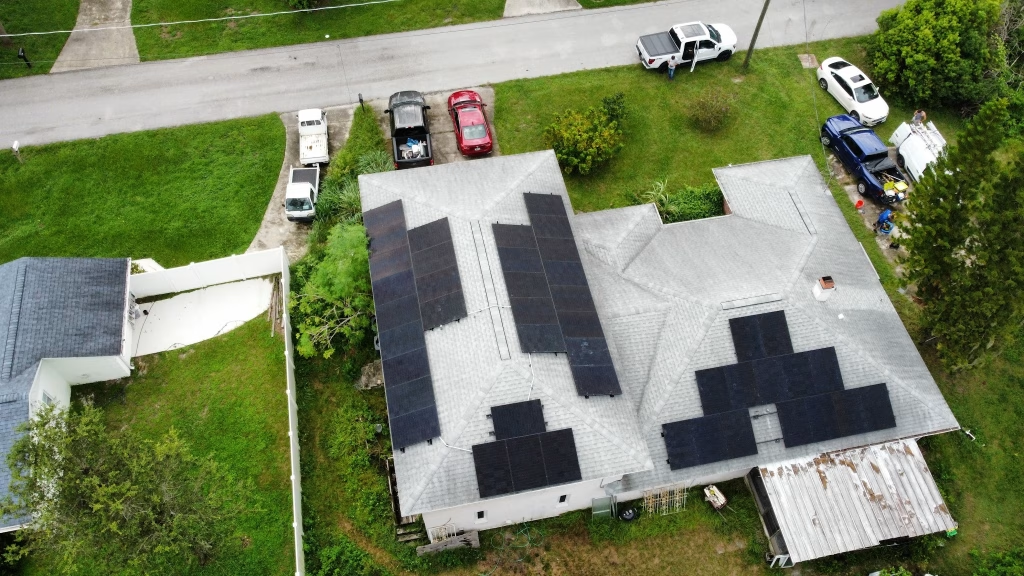
Tampa – Uglem Project
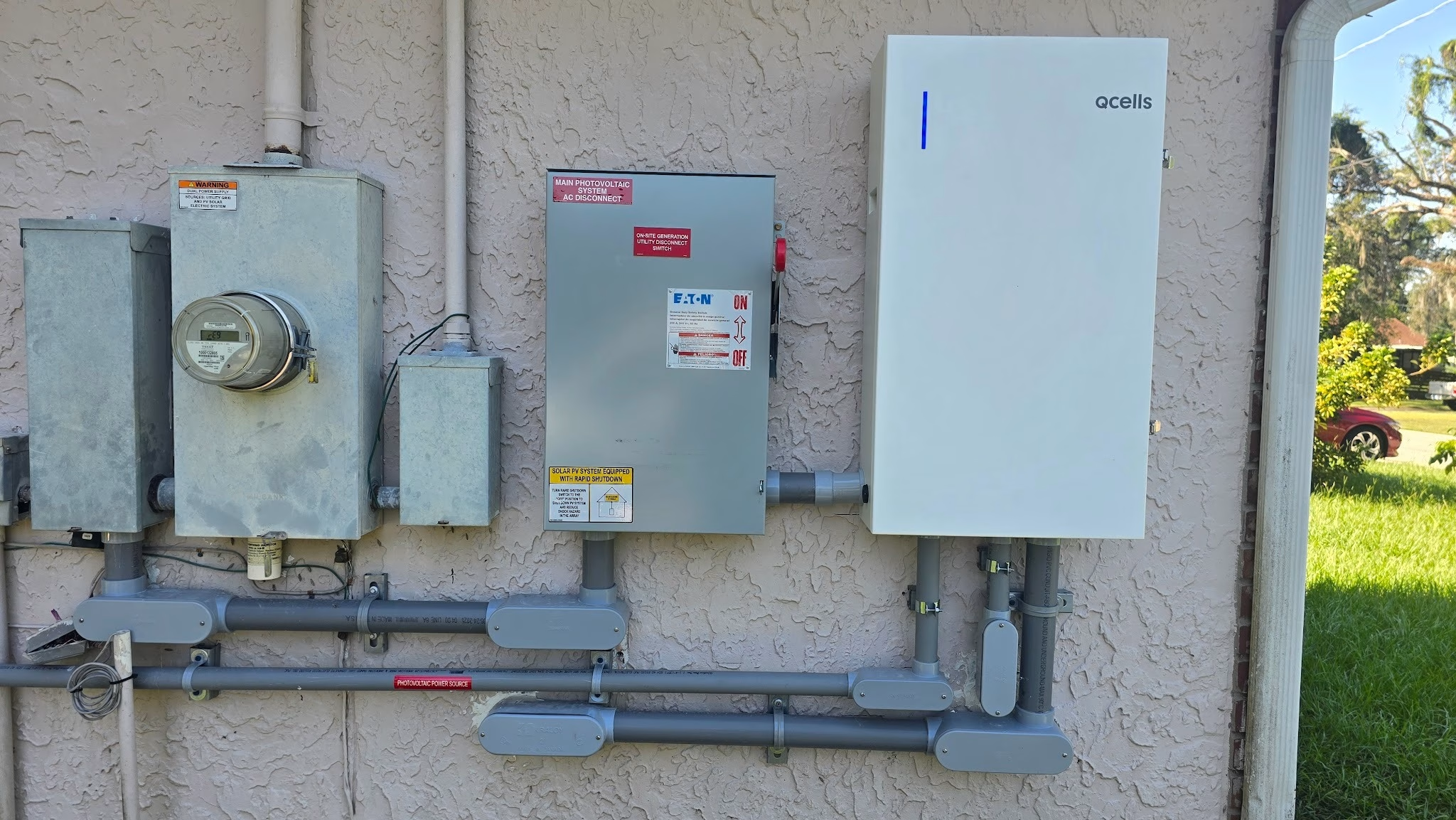
A fully engineered AC-coupled system utilizing the maximum number of Q CELLS AC Modules paired with two Q CELLS batteries. This configuration allows solar production and battery discharge to operate simultaneously for maximum output on a unified system.
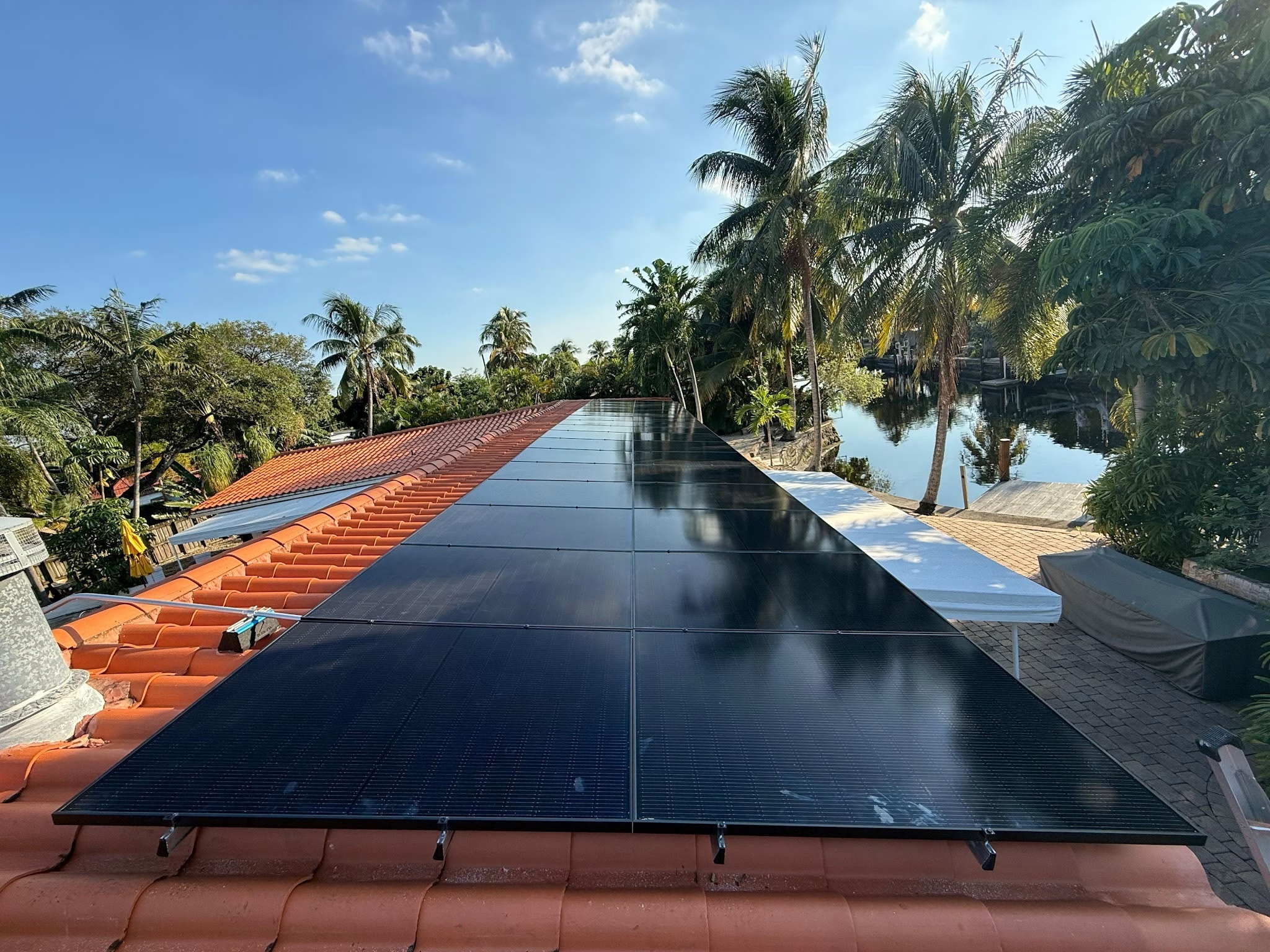
Broward County – Heath Project
A similarly designed AC-coupled system using the full capacity of Q CELLS AC Modules with dual batteries, delivering consistent and balanced performance under load.
Why AC Coupling Matters
AC-coupled systems offer critical advantages over simpler configurations:
- Continued solar production during outages
- Better scalability as your energy needs grow
- Higher overall performance when paired with multiple batteries
Battery Location, Accessibility, and Serviceability
An often-overlooked aspect of battery design is physical placement. Battery location directly impacts:
- Service accessibility
- Warranty claim efficiency
- System downtime during repairs
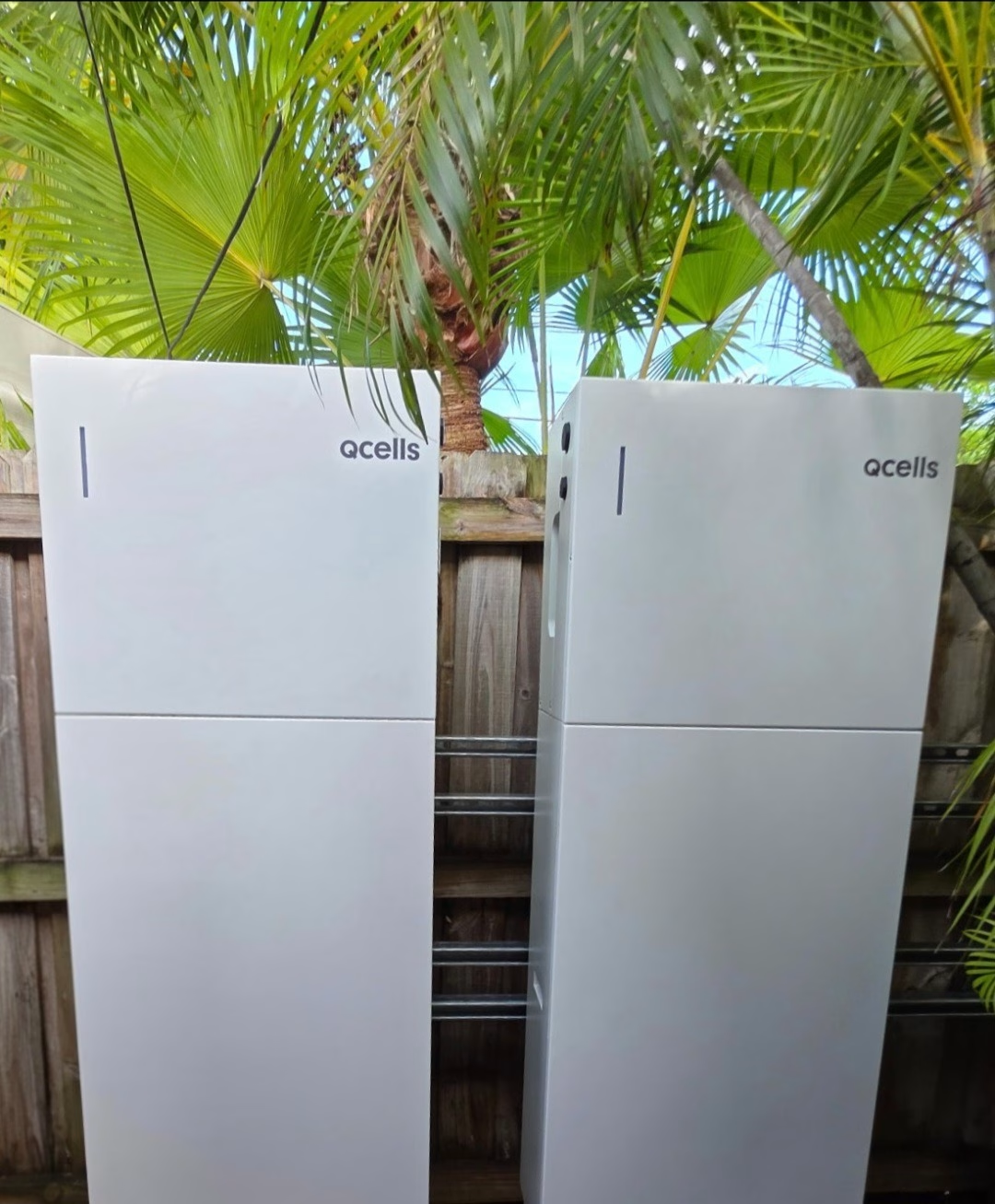 The Q CELLS solar battery system offers a key advantage: modular internal components that can be replaced individually. This allows for faster service and significantly reduced downtime.
By contrast, many monolithic battery systems require full unit replacement when faults occur. These units are often extremely heavy, requiring careful structural consideration for mounting and significantly increasing labor during service events.
Proper planning ensures:
- Batteries are accessible to technicians
- Systems are positioned safely above flood risk areas
- Structural loads are appropriate for the equipment installed
This is not just a design preference—it is critical for long-term reliability and ownership experience.
Scalability for the Future
Systems should allow for expansion without requiring a full redesign. This includes:
- Additional battery capacity
- EV charging integration
- Increased solar array capacity
The Economic Reality
Lower-cost single battery systems often underperform and lead to costly upgrades down the road. Properly engineered systems, while requiring more upfront planning, deliver long-term reliability and performance that protects your investment.
Final Thought: Design Is the Difference
The Uglem project in Tampa and the Heath project in Broward County demonstrate how Q CELLS AC Modules paired with dual batteries create a unified, high-performance system designed for real-world conditions.
At CKR Solar, we build systems—not just sell batteries.