
In Florida, solar and battery systems are not simply energy assets — they are critical infrastructure that must be designed to endure extreme environmental conditions.
From storm surge in Tampa Bay to increased wind load requirements in Pensacola, the reality of modern system design is clear: resilience must be engineered from the outset, not added as an afterthought.
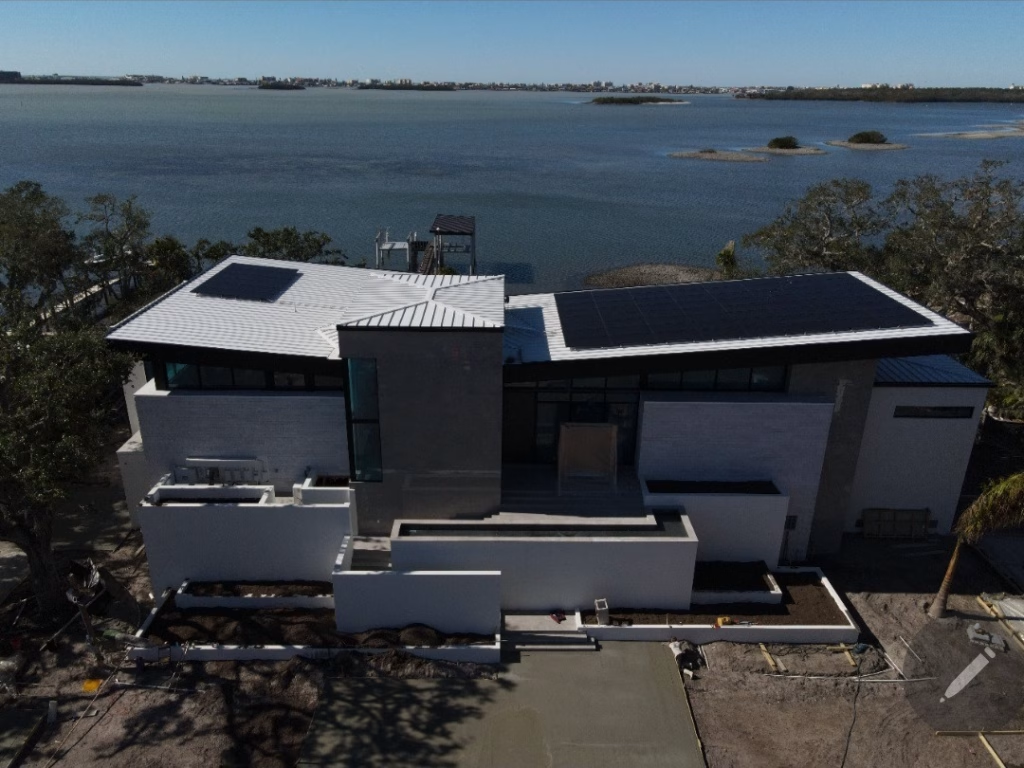
At CKR Solar, our approach to hurricane-resilient solar design is grounded in structural integrity, material selection, and rigorous compliance with evolving codes and real-world conditions. This philosophy was recognized in 2025, when CKR Solar was awarded by Flesia for excellence in hurricane-resilient design for both residential solar and battery installation on a custom home in St. Petersburg, Florida.
The Foundation of Resiliency: Racking and Attachment Systems
 All resilient solar design begins with one critical element — how the system is attached to the structure.
In high-wind environments, the attachment method determines whether a system withstands a storm or fails under uplift forces.
CKR Solar prioritizes proven, high-strength mounting solutions, including:
- IronRidge FlashFoot 2 systems for shingle roofs
- IronRidge HUG mounts for enhanced structural engagement
- Protea S-5! clamps for standing seam metal roofs
These systems are installed directly into roof trusses or structural members, ensuring that loads are transferred properly through the building envelope.
This is not an area where compromise is acceptable. To date, CKR Solar has never had to replace or reinstall a solar module due to wind-related failure — as, in properly engineered systems, should be expected.
Rail Selection: Structural Strength Over Cost Reduction
A common failure point in solar installations lies not in the modules themselves, but in the structural rails that support them.
While some installers opt for lighter-gauge rails to reduce material costs — particularly in a market affected by rising aluminium prices and tariffs — this approach introduces unnecessary risk.
CKR Solar standardizes on:
- IronRidge XR100 rails for residential installations
- Anodized aluminum rails for coastal and metal roof applications
- Powder-coated black rails where aesthetics are prioritized
In select cases, such as a project in Gulf Breeze, CKR Solar deployed XR1000 rails to achieve longer spans and increased structural capacity.
All systems are engineered with Professional Engineer (PE) certification, taking into account:
- Attachment spacing
- Rail spans and loading
- Splice locations
- Wind uplift calculations
This ensures that every installation is not only code-compliant but structurally optimized for its specific environment.
Module Selection: Designed for High Wind Loads
Not all solar modules are suitable for coastal or hurricane-prone environments.
CKR Solar works with manufacturers known for high structural performance, including:
- Qcells (Georgia, USA)
- Silfab (Washington, USA)
- REC (Singapore)
These modules are selected for their high Pascal ratings and suitability for installation in Miami-Dade County, where wind load requirements exceed 180 mph.
In certain installations, CKR Solar will implement a three-rail mounting system, further increasing resistance to uplift and long-term structural stress.
Minimising Exposure: Conduit and Electrical Design
Resiliency extends beyond structural components.
Electrical system design plays a critical role in protecting infrastructure during extreme weather events.
CKR Solar prioritizes:
- Internal attic conduit runs wherever possible
- Minimization of exposed external wiring
- Protection against water ingress and physical damage
By reducing exposed elements, systems are less vulnerable to wind-driven debris, corrosion, and long-term degradation.
Designing for Flood Risk: Lessons from Tampa and St. Petersburg
As storms intensify, flood risk has become a defining factor in system design — particularly along Florida’s Gulf Coast.
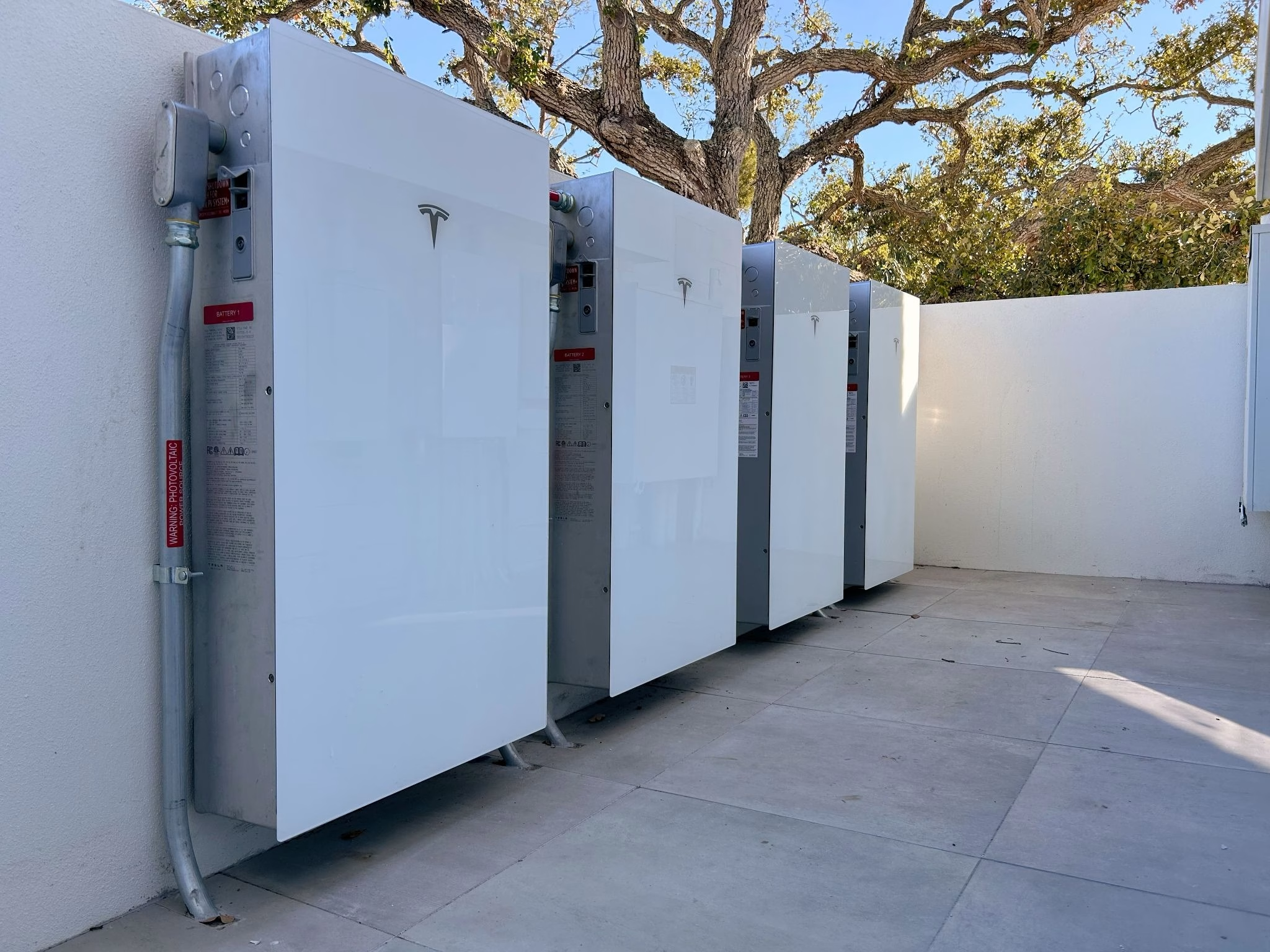
In Tampa and St. Petersburg, CKR Solar has implemented elevated system designs to mitigate against storm surge and flooding.
Key strategies include:
- Elevated equipment platforms to keep inverters and batteries above flood levels
- Wall-mounted battery systems positioned above projected surge zones
- Accessible disconnects designed for use by emergency personnel
In one Tampa project, CKR Solar worked closely with the city through multiple inspection stages — pre-construction, during installation, and post-completion — to ensure full compliance and safety.
The final design exceeded standard utility expectations, particularly regarding equipment elevation. Where necessary, CKR Solar advocated for safety-first design, recognizing that local Authority Having Jurisdiction (AHJ) requirements take precedence when life safety is concerned.
Pensacola and the Evolution of Wind Load Standards
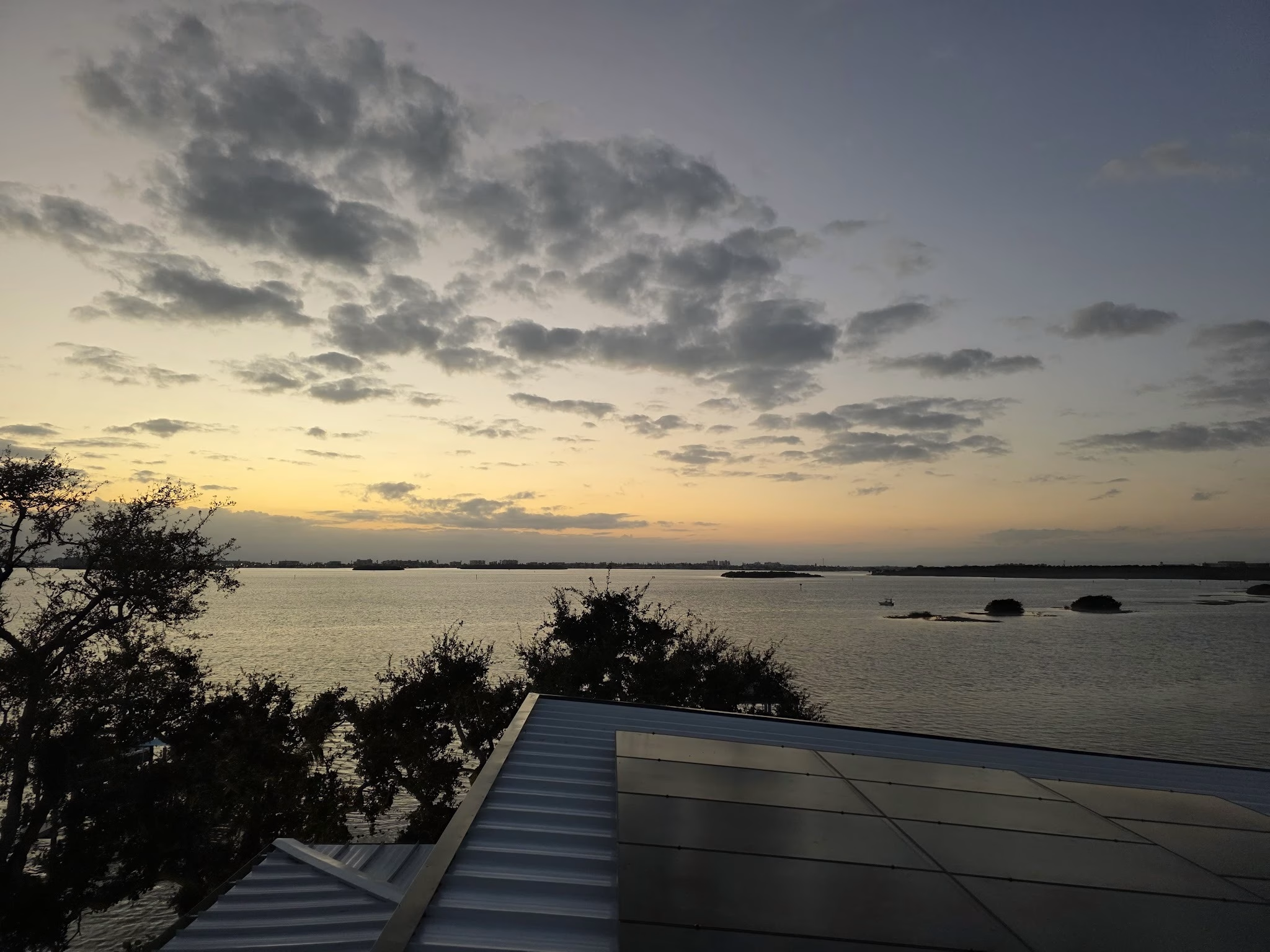 In Pensacola and the Florida Panhandle, wind load requirements have increased significantly, with uplift design now reaching 155 mph and above.
These changes reflect a broader shift in building standards, requiring solar systems to meet more stringent structural criteria.
To achieve hurricane-resilient solar design, CKR Solar adapts to these evolving requirements by:
- Increasing attachment density
- Adjusting rail configurations and spans
- Selecting higher-rated components
- Engineering systems specifically for coastal wind exposure
This ensures that installations remain compliant — and resilient — as codes evolve.
Award-Winning Design: St. Petersburg Project
CKR Solar’s commitment to resilient design was formally recognized in 2025 through an award from FLASEIA for a custom residential project in St. Petersburg, Florida.
This installation incorporated:
- High-strength racking and mounting systems
- Elevated battery storage
- Coastal-grade materials
- Fully engineered structural design
The project serves as a benchmark for how solar and storage systems should be designed in hurricane-prone environments.
A Consistent Standard Across All Regions
While hurricane exposure is most pronounced in Florida, CKR Solar applies the same engineering principles across all installations — including projects in Georgia and Alabama.
In regions such as Birmingham, where tornadoes and high-wind events present different risks, the same emphasis on structural integrity, component quality, and system resilience remains.
This consistent approach ensures that every customer benefits from:
- Robust system design
- Long-term reliability
- Enhanced energy security
Designing for the Reality of Modern Weather
Extreme weather is no longer an exception — it is a defining condition of system design.
With proper planning, engineering, and material selection, solar and battery systems can be built to withstand even the most challenging environments.
At CKR Solar, resilience is not an upgrade. It is the foundation of every system we install.
Build a Resilient Energy System
If you are planning a solar or battery installation in Florida, Georgia, or Alabama, it is essential to work with a provider that understands the realities of regional weather conditions and evolving code requirements and is committed to hurricane-resilient solar design.
CTA: Build a resilient energy system